Air New Zealand Opens Bookings for World’s First Economy Sleep Pods
Air New Zealand has officially opened reservations for its Economy Skynest, debuting December 2026 on Boeing 787-9 aircraft operating the ultra-long-haul route between New York JFK and Auckland. The six-bunk, lie-flat sleep pods represent the first product of their kind in commercial aviation, offering Economy and Premium Economy passengers a dedicated rest option without requiring an upgrade to Business Class.
What the Skynest Offers
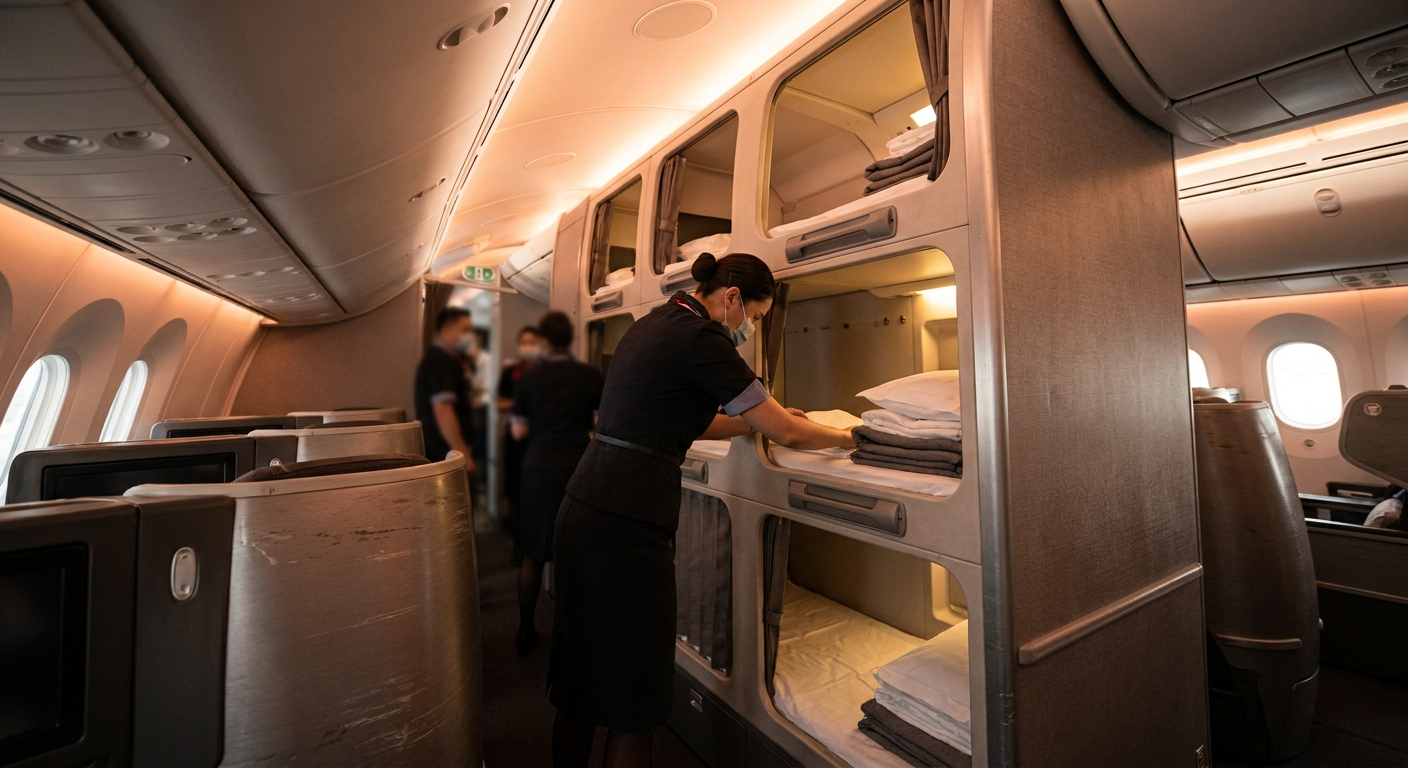
Each passenger can reserve one four-hour sleep session during the booking process, selecting both a preferred time slot and a specific bunk. The pods include full bedding, full-size pillows, earplugs, USB charging ports, reading lights and a cooling ventilation system. Specialized ambient lighting and privacy curtains create a sleep-focused environment at 30,000 feet. A “Nestcessities” kit accompanies each session, featuring an eye mask, socks, skincare products and dental essentials.
Pricing starts at approximately $495 per four-hour session, positioning the Skynest as a premium add-on rather than a complimentary benefit. The launch is a significant shift in how airlines monetize cabin space and passenger comfort on ultra-long-haul routes.
Broader Cabin Overhaul
The Skynest forms part of a comprehensive interior redesign for Air New Zealand’s 787-9 fleet. The aircraft will also feature upgraded Business Premier suites, redesigned Premium Economy seating, and improved Economy cabins equipped with 13.3-inch seatback screens and enhanced storage. All passengers in Economy and Premium Economy will have access to the new Sky Pantry self-service snack and beverage area throughout the flight.
The airline developed the Skynest over several years, testing with more than 200 customers to refine comfort and functionality before opening bookings.
Merchant and Operator Implications
For travel merchants and airline operators, the Skynest signals a broader trend in ancillary revenue stratification. Rather than offering binary cabin classes, carriers are creating layered comfort products that allow non-Business passengers to purchase discrete experiences. This approach mirrors strategies already deployed by hotel operators offering room upgrades, preferred inventory access, and experiential add-ons beyond the base accommodation.
The model carries operational considerations. Scheduling six sleep pods across a multi-hour flight requires precise timing logistics, session management and cabin crew coordination. The four-hour window constraint means demand will likely exceed supply on high-volume routes, creating potential for dynamic pricing adjustments closer to departure dates. Operators watching this launch will want to monitor whether the Skynest drives incremental revenue per passenger or simply shifts spend from other cabin segments.
Competitive Positioning
Air New Zealand is entering uncharted territory with the Skynest, though competing carriers have explored similar concepts. The airline’s ability to execute consistently on sleep session coordination will influence whether other operators accelerate development of analogous products. For route planners and network analysts, the JFK-AKL corridor is a high-profile test case for demand in this new comfort category.
The broader ultra-long-haul market continues expanding as carriers deploy newer aircraft capable of sustaining longer routes. Passenger tolerance for extended flights has increasingly relied on in-cabin comfort innovations, and products like the Skynest directly address the physical toll of multi-hour travel in conventional seating configurations.
Looking Ahead
The December 2026 launch will determine whether economy sleep products achieve sustainable market penetration or remain a niche offering for premium-focused carriers. Initial performance data from the JFK-AKL route will likely inform potential expansion to other ultra-long-haul destinations in Air New Zealand’s network.
For travel merchants, the emergence of segmented sleep products reflects a wider shift toward experience-based revenue streams. Monitoring adoption patterns, pricing elasticity and crew operational load will provide actionable intelligence for any operator considering similar investments in cabin comfort infrastructure.
Featured image: Professional stock photography, documentary style, natural lighting, shallow depth of field, Canon EOS R5 quality. Air New Zealand Boeing 787 cabin interior, lie-flat sleep pod bunks, soft ambient lighting, airline cabin crew preparing bunks, clean modern aircraft interior, realistic textures, photojournalistic style.