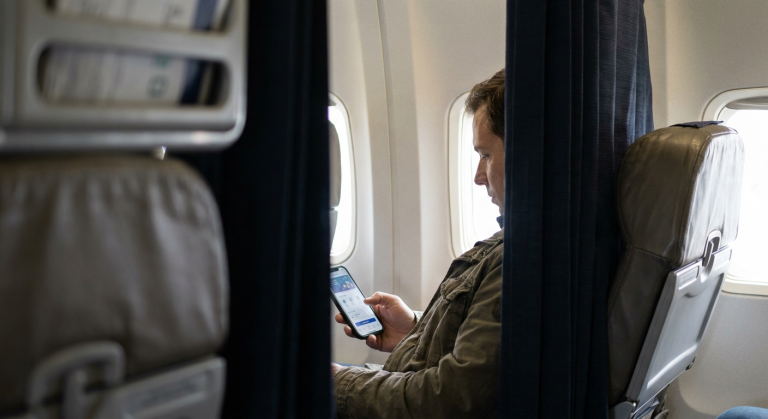

Frontier Airlines is installing Starlink across its fleet, becoming the first ultra-low-cost carrier in the United States to adopt the satellite-based in-flight internet technology. The carrier expects Starlink on its first aircraft by 2027, with customers able to access the service through a system managed directly by Starlink.
The move is a notable shift for Frontier, a carrier historically known for stripping costs down to the bone, including minimal or no in-flight connectivity. The decision to partner with Starlink underscores how seriously even budget carriers are now taking the premium passenger experience, a category that has become the primary profit engine for the airline industry overall.
Why This Matters for the Industry
Starlink, SpaceX’s satellite internet constellation, has been making rapid inroads into commercial aviation over the past two years. Unlike traditional air-to-ground Wi-Fi systems, Starlink delivers high-speed broadband at altitude by connecting directly to low-Earth-orbit satellites, providing performance that rivals ground-based home internet in many cases.
Delta Air Lines and JetBlue have already moved to equip portions of their fleets with alternatives (Delta working with Amazon’s Project Kuiper and JetBlue with Amazon Leo), making Starlink’s penetration into the U.S. Ultra-low-cost carrier segment a meaningful competitive signal.
For Frontier, the calculus appears to be twofold. First, Starlink is increasingly viewed by passengers as a baseline expectation on longer routes, and falling behind on connectivity carries a reputational cost that can bleed into customer loyalty and preference in a tight market.
The Premium Shift Reshaping Airline Economics
Frontier’s Starlink deal fits into a broader pattern reshaping airline economics. Premium seats, ancillary fees, and elevated service tiers have become the dominant story in airline profitability over the past several years. Even carriers like Frontier that built their business model on cost leadership are finding that standing still on the premium experience means losing share to rivals who are investing aggressively in cabin upgrades, loyalty programs, and connectivity.
The question for industry observers and travel merchants is what this means for the ultra-low-cost model itself. If even the most cost-disciplined carriers are moving toward free or premium high-speed Wi-Fi as a standard amenity, the traditional tradeoff between rock-bottom fares and stripped-down service continues to narrow. That has implications for OTAs, travel payment platforms, and any business that sits at the intersection of airline distribution and merchant services.
What Travel Merchants Should Watch
Three things are worth tracking as Frontier’s Starlink rollout progresses toward 2027. First, pricing: will Frontier offer Starlink as a free amenity included in the base fare, or will it remain a paid add-on? The answer will signal whether connectivity is being treated as a customer acquisition tool or a margin driver. Second, the operational model: with Starlink managing the system end-to-end, Frontier is outsourcing a meaningful chunk of its in-flight tech stack, which has implications for how airlines think about vendor relationships in an increasingly connected fleet. Third, competitive response: if Frontier gains a measurable edge in customer satisfaction scores tied to connectivity, expect pressure on Spirit, Allegiant, and other ULCCs to follow.
The satellite connectivity race in commercial aviation is accelerating, and Frontier’s move today is the clearest signal yet that no segment of the market, including the budget end, can afford to sit on the sidelines.
This article draws on reporting from Skift published July 14, 2026.