Southwest Airlines Taps Klarna to Bring Buy Now, Pay Later to Flight Bookings
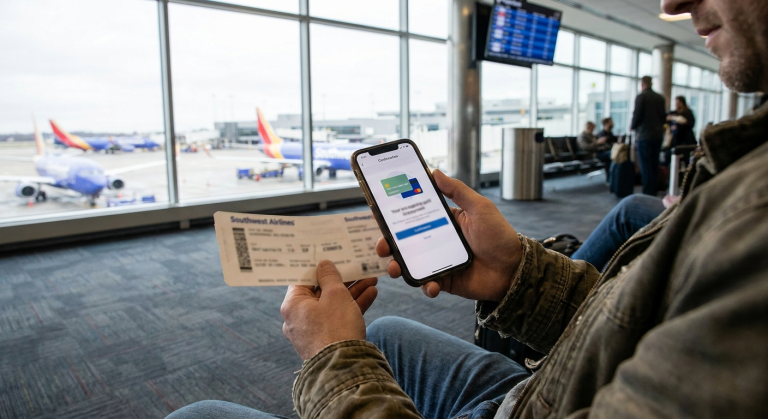
In recent coverage that is reshaping how merchants and industry analysts think about travel payments, Southwest Airlines has entered a long-term partnership with Klarna to offer flexible payment options at checkout. Starting later this year, customers booking through Southwest.com and the airline’s mobile app will be able to split purchases into interest-free installments or finance trips over time, directly within the booking flow.
The move positions Southwest, which carried over 134 million passengers in 2025, as one of the most prominent U.S. Carriers to embed BNPL functionality at the point of sale. Klarna, which serves roughly 119 million active consumers across 26 countries, gains a landmark domestic aviation partner and a meaningful foothold in a sector where flexible payment adoption has lagged behind retail.
Why This Partnership Matters for Travel Merchants
For travel operators and merchants watching payment trends, the Southwest-Klarna deal signals something concrete: BNPL is no longer confined to e-commerce fashion and electronics. The travel booking funnel, characterized by high average transaction values and variable consumer confidence, is increasingly被视为 a natural fit for installment-based payments.
Travel merchants have long contended with cart abandonment driven by sticker shock. A $400 round-trip fare can feel out of reach for a family of four even when the value is clear. Offering a four-payment installment option reduces psychological friction at the critical checkout moment, without requiring the airline or agency to carry the credit risk. That is the structural appeal for merchants: higher conversion, passed-through financing cost, and no receivable on the balance sheet.
The implications extend beyond airlines. Hotels, tour operators, and OTA platforms that integrate BNPL at checkout can expect similar dynamics: increased average booking value, lower abandonment, and access to a consumer segment that may defer large purchases without a payment flexibility option.
The Broader BNPL Push Into Travel
Southwest and Klarna are not alone in targeting travel with financing options. Pagaya Technologies and Upgrade recently expanded their partnership to bring AI-driven credit decisioning to BNPL products specifically aimed at travel merchants. The collaboration integrates Pagaya’s underwriting technology into Upgrade’s Flex Pay BNPL platform, broadening access to installment financing for a range of travel-sector clients.
That deal is smaller in consumer visibility than the Southwest-Klarna integration, but it points to a structural trend: BNPL providers are actively building travel-specific underwriting models. Traditional credit card underwriting treats travel spending as a general-purpose consumer category. Travel-focused BNPL can factor trip frequency, seasonal booking patterns, and cross-border payment behavior into approval logic, potentially expanding access for underserved traveler segments.
Operator Considerations and Risks
For merchants evaluating whether to offer BNPL at checkout, the calculus involves more than conversion lift. Chargeback rates, consumer protection regulation, and the operational complexity of integrating a third-partyfintech partner all require scrutiny. BNPL transactions are not immune to fraud, and the regulatory environment for installment credit products continues to evolve at both the state and federal levels.
Southwest’s choice of Klarna specifically, rather than an in-house financing solution, reflects a pattern of airline-fintech partnership over direct lending. The airline avoids building a lending operation while presenting the customer with a branded, Klarna-powered experience. For smaller travel merchants that lack Southwest’s scale, white-label BNPL platforms and payment orchestration providers offer a more accessible on-ramp to flexible payment options.
The 2026 travel payments landscape is also shaped by the broader shift away from legacy card rails toward digital wallets, account-to-account transfers, and local real-time payment networks. BNPL sits within that larger modernization wave rather than displacing it. Merchants that treat flexible payment options as part of a broader payments infrastructure upgrade, rather than a standalone feature, are likely to see more durable results.
What Operators Should Watch
The Southwest-Klarna integration goes live later this year. Early performance data on approval rates, average order value lift, and repayment delinquency will be closely watched by competitors in the airline and OTA space. If the results are strong, expect a cascade of similar announcements from other carriers and travel platforms. The merchant-operator angle is direct: checkout flexibility is becoming table stakes, and the operators who treat BNPL as strategic payment infrastructure rather than a consumer perk will be better positioned when the next partnership opportunity arises.