
Booking Holdings Stock Slides 23% as AI Disruption and Oil Prices Hit OTAs
The online travel agency model is facing its stiffest test in years. Booking Holdings (NASDAQ: BKNG), the parent company of Priceline, Kayak, and OpenTable, has seen its stock drop 23.1% year-to-date as twin headwinds — AI disruption fears and soaring oil prices — hammer the sector. The decline, which accelerated after Anthropic launched a new Claude plug-in seen as a direct threat to OTA business models, has investors and travel merchants alike reassessing the space.
The concerns are real, but the picture for operators is more nuanced than the headline numbers suggest.
What’s Driving the Selloff
Two forces converged to knock OTA stocks in early 2026. First, the AI threat: Anthropic’s Claude plug-in, which can assist with travel research and booking tasks, spooked investors who see generative AI as a potential disintermediator of the OTA model. Second, and perhaps more immediately painful for operators with fuel exposure, oil prices have surged on the back of geopolitical tensions involving Iran, including the ongoing situation surrounding the Strait of Hormuz.
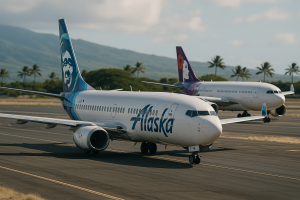
Airlines have already begun passing those costs along. Several carriers have announced fuel surcharges, and analysts warn that higher pump prices could also dampen short-haul road travel, compressing margins for operators across the board.
The Bull Case: Relationships Still Matter
Despite the stock’s decline, Booking’s fourth-quarter results tell a different story on the fundamentals. Room nights booked rose 9% year-over-year, driving 11% growth in gross bookings and revenue on a constant-currency basis. Revenue came in at $6.3 billion, beating the $6.13 billion consensus estimate. Adjusted EBITDA climbed 19% to $2.2 billion, and the company expanded its alternative accommodations inventory by 9%.
The counter-argument to the AI threat is straightforward: Booking’s real asset is its relationships with thousands of independent hotels worldwide. Reassembling that network, negotiators say, would be no small feat even for a capable AI tool. The company’s guidance, issued before the Iran conflict escalated, called for low double-digit growth in gross bookings and revenue, with mid-teens earnings-per-share growth projected.
What This Means for Travel Merchants
For hotel operators, cruise lines, and airlines weighing their distribution strategy, the current moment has a useful reset. OTAs have long argued that their marketing reach and booking infrastructure justify the 15-25% commission they charge. The AI era is testing whether that value proposition holds.
Operators who have invested in direct booking capabilities — loyalty programs, brand.com conversion tools, and first-party data collection — may find themselves with more use in OTA negotiations than they did a year ago. The merchants most at risk are those who remain entirely dependent on OTA traffic with no direct relationship to speak of.
The broader travel demand picture remains constructive. Young consumers continue to favor experiences over goods, and rising incomes in developing markets are expected to drive long-term travel growth. Whether that demand routes through OTAs or goes direct will be the defining commercial question of the next several years.
The Bottom Line
Booking Holdings is not going away. Its scale, hotel relationships, and international footprint remain formidable. But the 23% stock decline is a signal that the market is at least entertaining the idea that AI could meaningfully erode OTA economics over time. For travel merchants and operators building their 2026 distribution plans, that possibility deserves serious attention — not as a reason to abandon OTA partnerships, but as a reason to stop treating them as inevitable.
Sources: The Motley Fool (March 31, 2026); company filings.