Airwallex Hits $11 Billion Valuation as AI Agent Payments Reshape Travel Finance
Airwallex, the global payments platform serving major travel brands including McLaren, Qantas, Canva, and Shein, has closed a $320 million Series H funding round that values the company at $11 billion — a 38% jump from just six months ago. The raise signals accelerating investor appetite for AI-native financial infrastructure that could eventually let autonomous agents book, pay, and reconcile travel expenses without human intervention.
From Processing Payments to Powering AI Finance
The latest funding round was led by New York venture capital firm Addition, with participation from Baillie Gifford, Hummingbird, QED Investors, T. Rowe Price, Washington University in St. Louis, and Amex Ventures. For travel industry operators, the most relevant part of Airwallex’s announcement may be what it plans to do with the capital: accelerate development of autonomous finance and agentic commerce capabilities.
Airwallex reported annualized revenue of $1.3 billion in March, a 74% year-over-year surge, while annualized transaction volume more than doubled. More than 90% of its revenue now comes from customers using multiple Airwallex products, suggesting strong platform stickiness as the company expands beyond raw payment processing into broader financial software.
Two AI Products That Could Touch Every Travel Booker
Alongside the raise, Airwallex unveiled two AI-focused products worth watching for merchants and operators in the travel space.
The first, called T:0, is an AI-native platform designed to automate corporate finance functions including bookkeeping, tax, compliance, and reporting. The product is currently in private beta and could see broader availability in the coming weeks. For travel companies managing multi-currency revenue across global markets, automated reconciliation and tax compliance could significantly reduce operational overhead.
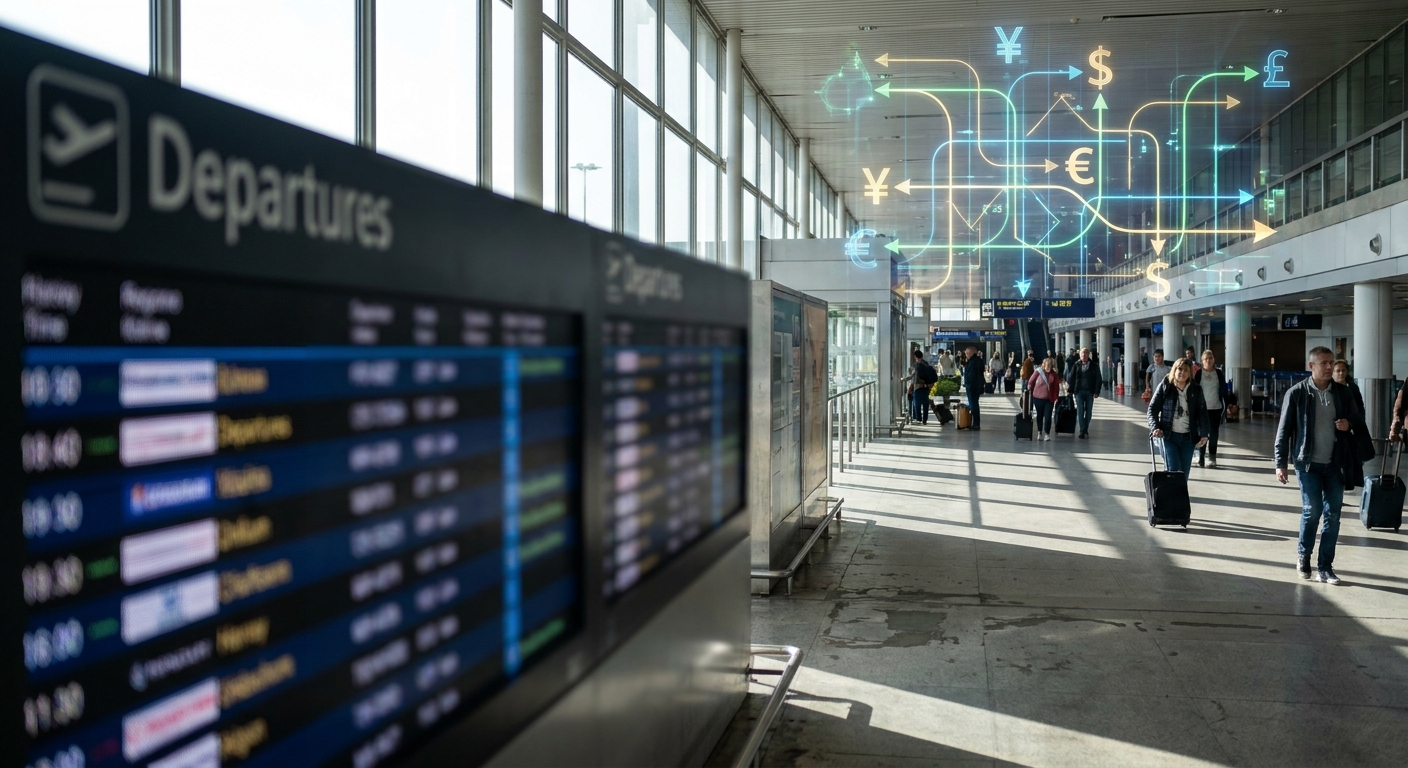
The second product, Airi, is an agentic consumer wallet that Airwallex said will eventually support delegated agent payments, spending limits, permission controls, and multi-currency balances. Think of it as a payments architecture designed for a world where AI assistants book flights, reserve hotel rooms, and handle incidentals on behalf of travelers. That vision remains aspirational, but Airwallex’s existing regulatory infrastructure — more than 85 licenses across North America, Europe, the Middle East, and Asia-Pacific — gives it a head start on competitors trying to build compliant cross-border AI payment flows.
What This Means for Travel Merchants and Operators
Airwallex’s trajectory reflects a broader shift in travel fintech. The major buzzwords in the space right now are agentic commerce for B2C travel bookings, with hotel accommodations leading the way, and stablecoins for B2B use cases including supplier payments and commission settlements. Airlines, OTAs, and hotel chains are all watching how AI-native payment rails develop, since autonomous booking agents represent both an opportunity and a potential disruption to existing distributor relationships.
For merchant-operators evaluating payment partners, Airwallex’s scale and regulatory footprint make it a candidate worth watching. The company processes multi-currency payments for businesses with global exposure, which is precisely the customer profile that benefits most from AI-driven reconciliation and compliance tools. Whether Airwallex’s AI products deliver on their promise remains to be seen, but the capital being deployed into agentic commerce infrastructure suggests the travel payment landscape is due for another significant shift.