AI Agents Are Quietly Booking Hotel Rooms. Is Your Payment Stack Ready?
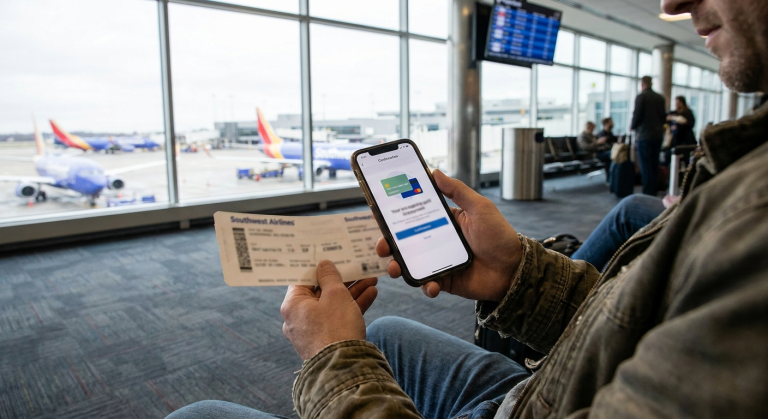
By the end of this month, a traveler in Singapore might ask their AI agent to find a beachfront room in Phuket for the weekend, stay under $200, and book it instantly. No website visit. No credit card entry. The agent handles the search, payment, and confirmation on its own. That workflow is now a real product launching in the hospitality market, and it is forcing operators and technology providers to reckon with what merchant infrastructure actually looks like when machines become the customers.
OwlTing Group (NASDAQ: OWLS), a fintech company operating the OwlNest property management system across more than 2,800 hotels and accommodations worldwide, is launching its OwlPay Booking Engine for Agent Checkout this month. The service is purpose-built to let hotels, bed-and-breakfasts, online travel agencies, and hospitality platforms accept reservations and process payments initiated entirely by AI agents acting on behalf of travelers.
The launch is not speculative. OwlTing’s existing client network processed approximately $280 million in gross booking volume in 2025, with monthly gross order volume reaching roughly $30 million in March and April. That existing transaction base gives the company an immediate proof point for what end-to-end AI agent booking flows could look like at scale.
Three Layers, One End-to-End Flow
The service is structured around three integrated components, each addressing a distinct part of the payment and booking process.
OwlPay Agent Checkout handles the booking confirmation and payment acceptance side. It is the interface between the hotel’s reservation system and the AI agent placing the booking, verifying that a room is available and locking in the rate at the moment the agent commits.
OwlPay Agent Wallet is the payment execution layer, giving AI agents a self-custody wallet designed to execute payments within the scope of user authorization. The wallet connects to OwlTing’s Visa Direct integration, which allows eligible U.S. Debit cardholders to fund USDC transactions without a separate exchange account, addressing one of the friction points that has historically slowed crypto-adjacent payment adoption in travel.
OwlPay Harbor handles cross-border settlement, moving funds from the guest side through to the hotel supplier on the back end, in multiple currencies. For operators working with international guests or distributing through OTAs with offshore payment flows, this is the component that determines whether money actually arrives in usable form.
The revenue model layers platform service fees from hospitality operators integrating the service, payment service fees on multi-currency transactions, and per-transaction fees on AI agent-initiated bookings processed end-to-end.
Why This Matters for Merchant Operators Now
The numbers behind the trend are worth sitting with. Phocuswright Research projects global online travel gross bookings will reach approximately $1.2 trillion in 2026, with hotels and lodging as the single largest category. Online penetration in the hotel segment is expected to rise from 55% in 2024 to 58% by 2026. IDC goes further, predicting that 30% of all travel bookings will be executed by AI agents by 2030.
Even a modest reallocation of that volume toward AI-initiated channels would represent a fundamental shift in how hotels acquire guests and collect payment. The implication for merchant operators is not abstract: the point of sale is becoming an API call, and the counterparty is a machine, not a human with a credit card.
For hotels and hospitality platforms, being excluded from that shift has a direct revenue consequence. If an AI agent cannot find your property, cannot process your payment rails, or cannot confirm your inventory in real time, you effectively do not exist in the new distribution channel. IDC’s analysis frames this as a discoverability problem, but it is also a payment infrastructure problem.
The Operational Reality for Hospitality Operators
OwlTing is positioning its existing OwlNest client base as the initial deployment audience, which means the rollout begins with properties already on its property management system. For operators evaluating whether to participate, the key questions are not about the technology concept. They are about integration complexity, fee structures, and how quickly AI agent bookings will represent a meaningful share of reservations.
The Visa Direct integration for funding agent wallets is a notable detail for U.S. Market operators, since it provides a familiar on-ramp for guests who want to fund AI agent bookings in USDC without navigating standalone crypto exchanges. Whether that is enough to drive adoption among mainstream travelers remains an open question, but the infrastructure is now concrete in a way it was not twelve months ago.
Cross-border settlement has historically been one of the most operationally painful parts of international hospitality distribution, with delays, currency conversion losses, and correspondent banking fees eating into operator revenues. An automated cross-border settlement rail purpose-built for agent-initiated bookings, if it performs as described, could materially reduce that friction for operators working with international distribution partners.
The Bigger Picture
What OwlTing is attempting fits within a broader reorientation of the hospitality technology stack around agentic AI. IDC’s 2026 FutureScape for hospitality notes that agentic AI is fundamentally changing the distribution funnel, forcing brands to rethink data strategies and direct booking infrastructure. PwC’s 2026 outlook identifies AI-driven revenue management and personalization as areas where hotels that fail to integrate risk losing ground to competitors that do.
The OwlPay launch is a specific, concrete data point in that trend. It is not a proof of concept or a pilot announcement. The service is launching this month with a defined client base and a defined revenue model. For merchant operators and technology providers in the travel payments space, the question is no longer whether AI agent bookings will materialize. It is how quickly they will matter, and whether the infrastructure supporting them is ready to process payments as reliably as it processes human card-not-present transactions today.
Operators who want to be part of that flow need to evaluate their property management system integrations, their payment processing partners, and their ability to serve real-time inventory data to machine agents. The booking is coming. Whether your payment stack can handle it is the question worth asking this month.