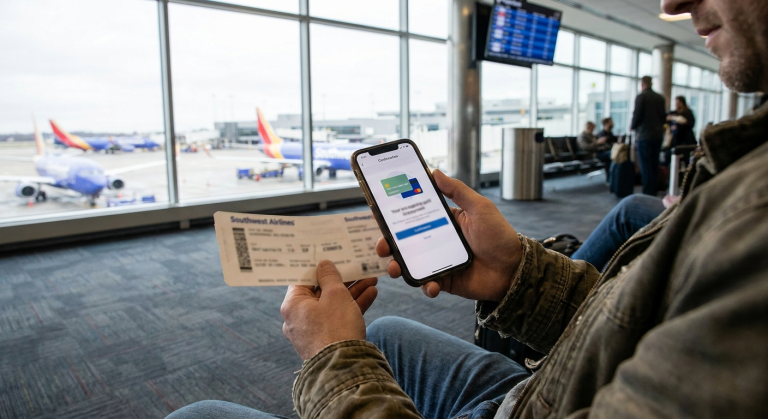
The Checkout Screen Is Where Travel Gets Decided
Something has shifted in the way travel gets sold. The moment that matters most is no longer the search results page or the marketing email. It is the checkout screen. A new study from PYMNTS Intelligence and Marqeta, based on surveys of 30 U.S. Travel firms, makes that clear: embedded finance has moved from a supporting role to core infrastructure. The data shows that 93% of travel companies now offer at least one embedded finance capability, with digital wallets leading the way.
Depth Over Expansion
The finding that stands out most is not about adding new features. It is about improving the ones already there. Sixty-five percent of firms that offer digital wallets are focused on enhancing those capabilities rather than introducing new ones. That is a meaningful strategic pivot. Travel platforms are consolidating their stacks around search, booking, payments and loyalty in a single flow. The logic is simple: keep the customer inside that flow and you reduce friction at every step.
Travel firms that refine their embedded tools rather than pile on new ones are better positioned to convert demand into completed bookings. Nearly six in ten companies surveyed by PYMNTS say access to better customer data is a primary reason to invest further in embedded finance. A similar share cites competitive advantage. Both goals are served when existing tools work well and generate clean, usable data.
What the Numbers Show
The returns are concrete. Fifty-seven percent of firms report higher checkout rates after deploying embedded wallets. Seventy percent of those already using wallets point to improved operational efficiency and lower customer churn. Those are not marginal gains. They are the kind of outcomes that change how operators think about their technology stack.
Providers are making targeted improvements. They are refining wallet interfaces, tightening loyalty integration and smoothing individual checkout steps. The objective is to remove hesitation at the point of payment and to encourage repeat use. Travelers who complete a booking without friction are far more likely to come back and book again on the same platform.
What Travelers Want
Consumer expectations are driving these decisions more than internal engineering preferences. Travelers want payments that are immediate and unobtrusive, with rewards applied automatically and credentials stored securely. Wallets that connect booking, payment and loyalty functions address those expectations directly.
The research shows wallets perform best when they extend across the full travel life cycle. They are used during search and booking, but also during the trip itself and after it ends. That continuity supports repeat engagement and eliminates the need to reenter payment details or navigate outside the platform. It also gives travel firms a clearer view of customer preferences and purchasing patterns, which can be used to tailor has and refine pricing.
The Commercial Case for Embedded Wallets
Embedded wallets give travel businesses a way to capture data that was previously lost at the point of payment. That information can be used to personalize offers, adjust pricing dynamically and build loyalty program mechanics that actually work. The firms doing this well are treating the checkout screen not as a terminal event but as the beginning of a sustained customer relationship.
Execution depends heavily on the right partners. Travel firms are looking for providers that can integrate easily, support customization and deliver strong fraud protection. The report notes that 79% of firms focus on advanced risk capabilities when selecting embedded finance vendors. That is understandable given the volume of card-not-present transactions in travel. Half of the firms surveyed say that strong cross-functional collaboration with their technology partners is a key measure of success. The complexity of embedded finance requires coordination across technology, compliance and operations.
What Operators Should Do Now
The direction is settled. Digital wallets are becoming part of the underlying architecture of travel commerce. For merchants and operators, the practical implication is straightforward: the firms that will win on conversion are those that treat checkout as a product, not a utility. That means investing in wallet performance, measuring abandonment at the payment step the same way you measure funnel drop-off elsewhere, and building loyalty mechanics that actually attach to real customer behavior rather than self-reported preferences.
The operators who treat embedded finance as a growth lever rather than a checkbox will be the ones capturing the travelers who reach checkout and actually complete the booking. In a market where acquisition costs keep rising, that is not a small thing.
Sources: PYMNTS Intelligence and Marqeta (joint study on embedded wallets in travel); Hotel News Resource (industry coverage April 28, 2026)