Revolut’s First Physical Store Signals a New Chapter for Fintech Trust
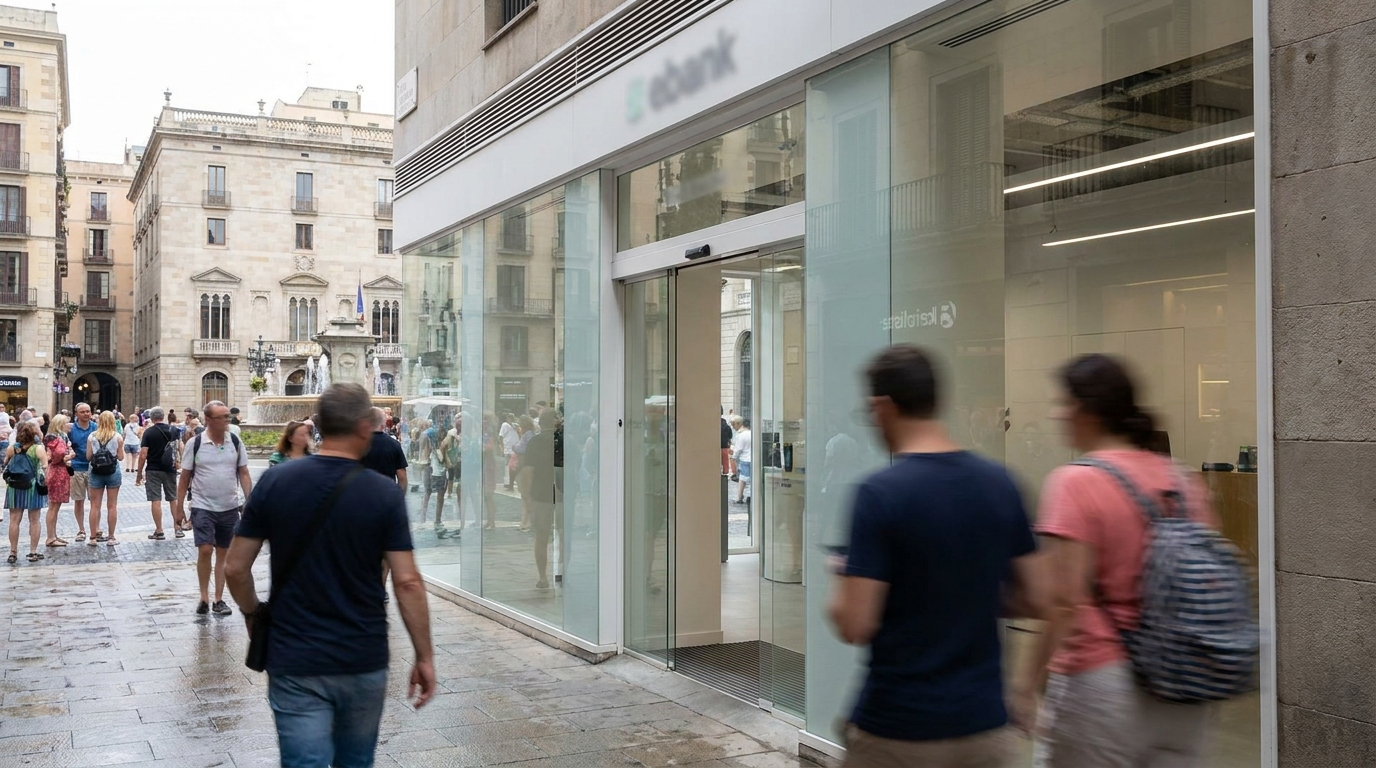
In a move that would have seemed unthinkable a decade ago, Revolut, the app-only fintech darling that built its reputation on the premise that physical banking was obsolete, is opening its first permanent brick-and-mortar store. The location: Barcelona, near Plaça Catalunya, by the end of 2026 or early 2027. For travel merchants and operators who have watched fintech reshape payment acceptance over the past ten years, this is a signal worth reading carefully.
Revolut confirmed the plans to Euronews in late April, describing the space as a “high-visibility, immersive” presence rather than a traditional bank branch. The company said Barcelona was chosen for its combination of local density, global relevance, tourism, and innovation. That framing should sound familiar to anyone who has worked in travel commerce. The same factors that make Barcelona attractive to Revolut are the same factors that make it one of the most visited cities in Europe.
What the physical pivot actually means
The fintech industry spent most of the 2010s arguing that physical branches were legacy infrastructure, expensive anchors that slowed innovation and bloated operating costs. Revolut was one of the loudest voices in that camp. Its 70 million global customers signed up specifically because there was no branch to visit, no paperwork to file, no queue to stand in. The app was the product.
So why open a store now? The short answer is trust. At scale, digital-only brands face a problem that is hard to solve through a screen: legitimacy. When a fintech company is startup-sized, its customers are early adopters who accept the lack of physical presence as a feature. When it grows to 70 million customers across multiple continents, a much broader demographic starts asking harder questions. Where is this company actually located? Who do I call if something goes wrong? What happens if the app goes down?
A physical address near one of Europe’s most recognizable squares answers those questions in a way that no amount of app optimization can. For travel merchants who work with Revolut or similar platforms for payment processing, the implications are practical. A fintech company that has demonstrated staying power through physical investment may be a more durable partner for long-term payment infrastructure agreements.
The Barcelona angle for travel commerce
Barcelona processed roughly 26 million overnight visitors in 2024, according to municipal tourism data. That volume creates one of Europe’s largest real-world testing grounds for any financial product that touches travelers. Revolut’s multi-currency accounts and instant transfer services are already widely used by international visitors avoiding traditional banking friction. A physical presence in the city adds a customer service layer that purely digital competitors struggle to replicate.
For operators in the travel merchant ecosystem, this matters in a few concrete ways. Loyalty programs that rely on Revolut for point redemptions or currency conversion may find the platform more attractive to partners if the physical expansion signals operational maturity. OTAs processing cross-border payments through Revolut-style intermediaries may see improved reliability as the platform invests in infrastructure that serves a physical customer base. And the broader message that even the most digital-first financial companies are now investing in physical trust infrastructure suggests that the boundary between fintech and traditional finance is continuing to blur.
Record growth and what’s driving it
The store announcement landed alongside Revolut’s 2025 results, which showed revenue up 46 percent and profit before taxes rising 57 percent year-over-year. The growth was driven by higher customer fees and strong expansion in lending products, with the loan portfolio growing 120 percent over the same period. Those numbers position Revolut as one of the few fintech companies at this scale that is genuinely profitable and still growing rapidly.
The company is also actively pursuing banking licenses in multiple markets, which would allow it to hold customer deposits and offer a broader range of financial services. That regulatory ambition is part of what makes the physical store investment strategically coherent. A banking license application is easier to defend when the company can point to a physical location in a major market as evidence of long-term commitment. For travel merchants evaluating fintech partners, regulatory standing and physical presence may increasingly factor into vendor assessment processes that were previously driven entirely by API pricing and integration convenience.
Implications for the payments landscape
The broader lesson from this move is that trust in financial services is not exclusively a digital problem. Fintech companies that have scaled to mainstream audiences are discovering that the customers who were early digital adopters now want the same assurances that customers of traditional banks have always had. Physical presence, human customer service options, and a visible commitment to specific markets are becoming competitive differentiators rather than legacy costs.
For travel merchants and operators, the message is not necessarily to change payment providers today. It is to monitor which fintech partners are investing in operational depth and which are relying purely on price competition. A payment processor with 70 million users and a physical flagship in a global travel hub is playing a different game than an app-only competitor with no fixed address. That difference in scale and ambition can translate into real-world reliability for businesses that depend on seamless transaction processing at volume.
Travel merchants who understand that dynamic will be better positioned to choose payment partners that will still be here in five years.