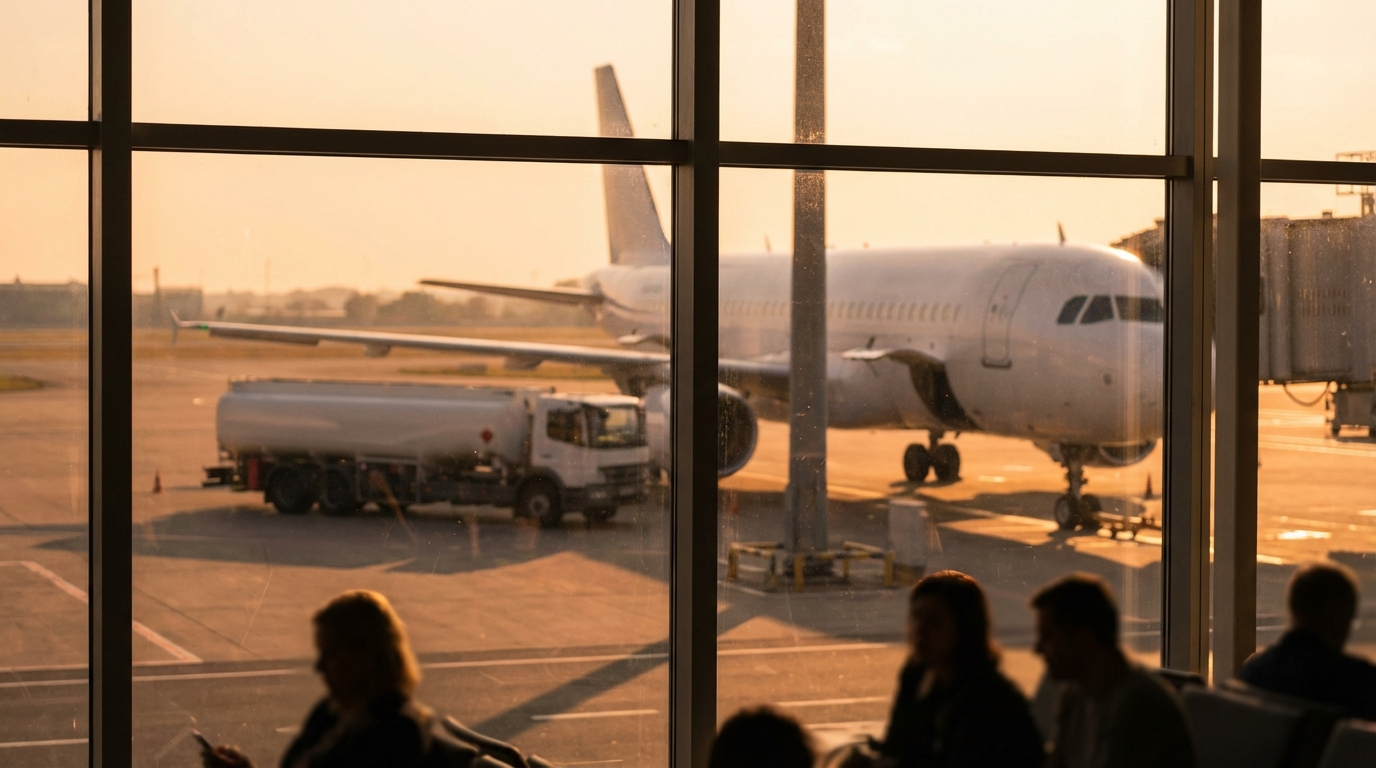
Iran Conflict Drives Jet Fuel Prices Up Nearly 100%, Airlines Push Fees Higher
The US-Israeli military conflict with Iran has sent jet fuel costs soaring across the globe, prompting major airlines to add significant baggage fee increases and fuel surcharges that are reshaping the cost structure for travel merchants and their clients.
According to data from Airlines for America, the average price of jet fuel at four major US hubs (Chicago, Houston, Los Angeles, and New York) climbed from $2.50 per gallon on February 27 to $4.81 by early April — nearly doubling in just weeks. Industry analysts now estimate the conflict could cost US airlines $24 billion in added fuel expenses, with some projections putting the figure north of $100 billion depending on how long hostilities continue.
Iran’s response to the strikes included closing the Strait of Hormuz, the narrow waterway through which approximately one-fifth of the world’s oil flows. That single act dramatically tightened global energy markets and sent fuel costs climbing across the aviation sector.
Airlines Pass Costs to Travelers
Major US carriers have moved quickly to offset rising fuel bills. Delta Air Lines, United Airlines, and JetBlue have all announced baggage fee increases since early April.
Delta raised its first and second checked bag fees by $10, bringing the cost to $45 and $55 respectively on most routes. A third checked bag now runs $200, an additional $50 from prior pricing. The changes took effect in early April. Despite the higher costs, Delta reported record quarterly revenue of $15.9 billion and expects to post a $1 billion pre-tax profit for the quarter ending in June — underscoring how quickly airlines can recover increased costs through fee adjustments.
United Airlines implemented similar increases, raising first and second checked bag fees by $10. First bags now cost $45 when booked in advance or $50 within 24 hours of travel. Second bags run $55 or $60 depending on booking timing. United noted this was its first baggage fee increase in two years. Notably, the airline acknowledged the new fees may not be temporary.
JetBlue adjusted its baggage pricing by $4 for first checked bags and $9 for second checked bags, citing rising operational costs as justification.
“While we recognize that fee increases are never ideal, we take careful consideration to ensure these changes are implemented only when necessary,” JetBlue said in a statement reported by NBC News.
International Carriers Join the Surcharge Push
International airlines have moved to fuel surcharges rather than straight fee increases. Qantas, Cathay Pacific, and Thai Airways have all implemented new or increased fuel surcharges on international routes. Air India and Japan Airlines have taken similar steps, with surcharges climbing more than 10 percent on some routes.
British Airways is reportedly working with its pilots union on compensation adjustments, reflecting the broader pressure on airline cost structures across the Atlantic.
The Detour Factor
In addition to higher fuel consumption costs, airlines are burning more fuel simply to reach destinations. Airlines are routing flights around Iranian airspace and the broader conflict zone, adding miles to many international routes. Delta specifically acknowledged the impact of longer flight paths on its operational costs during recent investor communications.
What Travel Merchants Need to Know
For travel merchants and operators, several dynamics warrant attention. The fee increases appear结构性 — meaning airlines appear to be treating these not as temporary adjustments but as permanent additions to their revenue models. Airlines have historically been reluctant to reduce fees once implemented, and industry observers note that the current environment gives carriers cover to make changes they have long wanted to make.
Travel advisors working with cost-conscious clients should factor these fees into booking recommendations, particularly for multi-leg itineraries where baggage fees can compound quickly. Corporate travel managers updating travel policies should also review baggage allowances and reimbursement thresholds.
For clients who have not yet traveled during this period, there may be limited recourse. Airlines have broad contract-of-carriage provisions allowing them to adjust fees, and the current fuel environment gives them considerable cover for doing so. Travelers holding existing tickets for routes now subject to fuel surcharges should check carrier announcements to understand exactly what charges apply.
The broader question — whether these fees will come down when fuel prices eventually normalize — remains unanswered. Delta declined to confirm whether its new rates were permanent or subject to future revision.
The Skift Travel Health Index, which tracks industry momentum, flatlined at 100 in February 2026, down from 105 in January. The index suggests the travel industry entered the year with growth expectations that have since stalled amid geopolitical uncertainty.
Skift Research noted that the February reading points to more than a slow month, and that conflict-driven shifts in travel patterns have become a defining feature of the current operating environment.
For travel merchants, the immediate reality is simpler: fuel costs are up, fees are rising, and clients will need clear guidance on what their trips actually cost.