The Alaska-Hawaiian Merger Enters Its Most Consequential Phase Yet
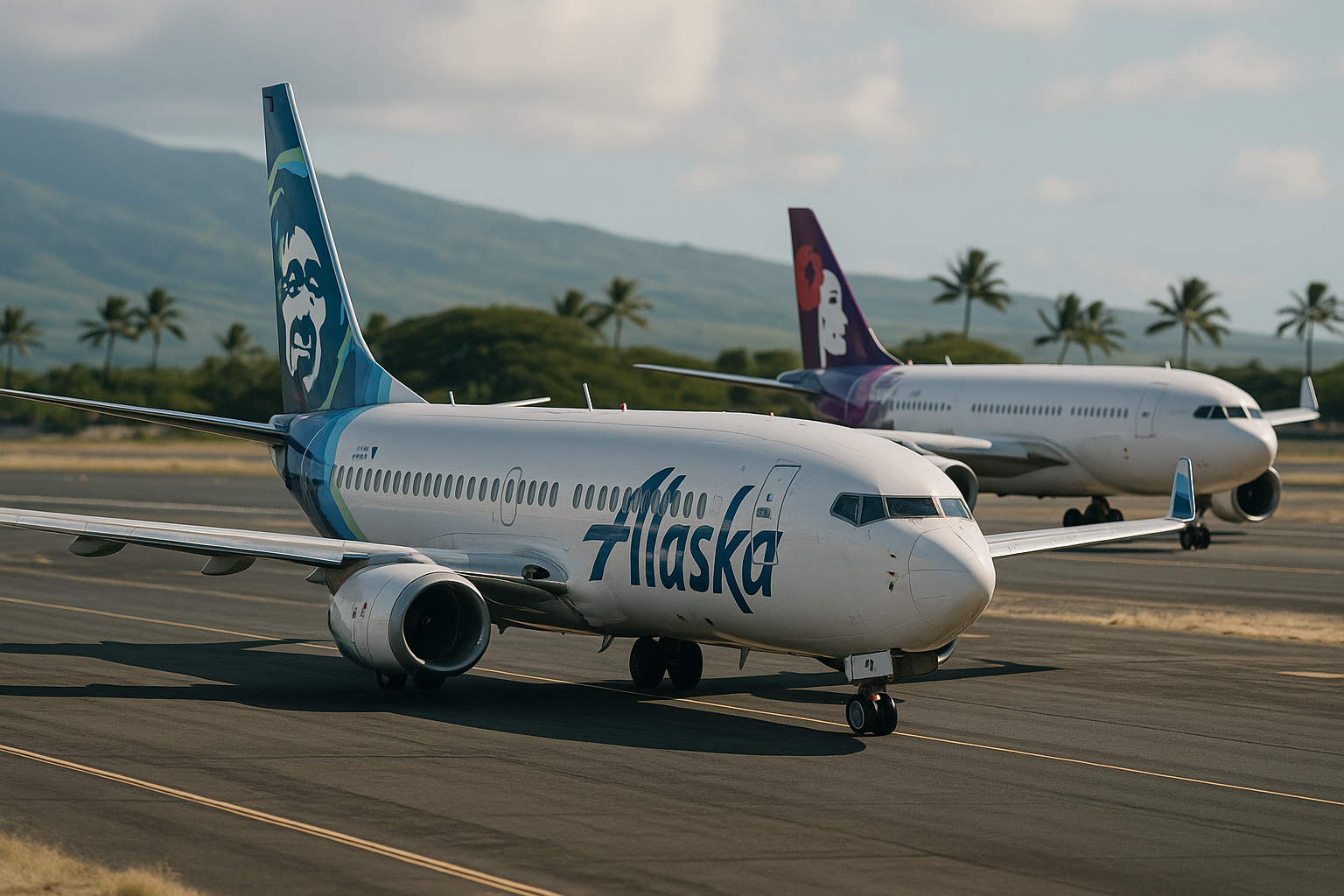
Alaska Airlines is approaching one of the most significant milestones in its $1.9 billion acquisition of Hawaiian Airlines: the April 22, 2026 operational merger date. On that day, the two carriers will cease operating as separate entities, and the reality of the combined airline will become tangible for millions of travelers, loyalty members, and travel businesses that rely on Hawaii routes.
The stakes for travel merchants and tour operators are considerable. Alaska and Hawaiian together control a significant share of nonstop flights between the U.S. Mainland and the Hawaiian Islands, particularly on the West Coast. Any disruption to scheduling, inventory management, or loyalty program functionality during and after the merger directly impacts how travel sellers build and price Hawaii packages.
What the April 22 Deadline Means for Bookings
The operational merger date is not an accounting footnote. It is the point at which Alaska and Hawaiian will begin running under a single operating certificate, using unified scheduling systems, crew assignments, and pricing architecture. For travel agents and online travel agencies that have been managing split inventory across both carriers, the transition requires careful reconciliation of routes, fare classes, and connecting itineraries.
Alaska has been clear that the core Hawaii network will be preserved. The carrier has stated that it intends to maintain service to all existing Hawaiian destinations, including inter-island routes that Hawaiian has operated independently. But travel businesses that have watched previous airline mergers unfold know that the reality on the ground often diverges from pre-announcement assurances, particularly in the first months after operational integration.
Mileage Plan and HawaiianMiles members are already navigating a loyalty landscape in flux. The combined Atmos Rewards program, which launched in late 2025, is the unified loyalty currency for both carriers. Earn rates, partner integrations, and redemption options have been consolidated, but the transition has not been seamless. Industry coverage has documented booking system failures, delayed mileage credits, and confusion over how elite status qualifications translate across the merged entity.
The JetBlue Variable
Complicating the picture further, JetBlue has reportedly hired advisers to explore a potential sale, with Alaska Airlines identified as one of three scenario-planned potential buyers. The report, covered by Beat of Hawaii and other regional outlets, has rekindled speculation about further consolidation in the U.S. Airline industry and what it would mean for Hawaii connectivity.
Alaska is already absorbing Hawaiian. Adding JetBlue, which carried nearly 40 million passengers last year across a fleet of nearly 300 aircraft, would represent a transformation of a fundamentally different scale. JetBlue brings strong positions in Boston and New York, transatlantic routes, and a customer base that has no natural connection to Hawaii under the current airline map.
The strategic logic is not difficult to see. An Alaska-Plus-JetBlue combination would create a dual-coast presence unmatched among non-Big Three carriers. Mileage Plan would absorb JetBlue TrueBlue members, dramatically expanding the loyalty program’s reach. But the operational and financial burden of completing one major acquisition while simultaneously attempting another raises serious questions about execution risk.
For travel merchants, a potential Alaska-JetBlue deal introduces another layer of uncertainty into booking decisions made today. Contracted fares, group block allocations, and commission structures negotiated under existing airline agreements could shift materially if ownership changes. The window between now and any formal announcement is typically too short for meaningful contractual protection, leaving travel sellers exposed to rapid changes in pricing and inventory availability.
Regulatory and Competitive Dynamics
Alaska’s regulatory position is notably stronger than United’s in any potential bidding scenario. An Alaska-JetBlue combination would present minimal overlap concerns for regulators, given the limited route competition between the two carriers. The Department of Justice has shown a willingness to approve airline consolidation, with the Alaska-Hawaiian deal itself having cleared review without significant conditions.
United, by contrast, would face a harder path. A United-JetBlue merger would concentrate additional capacity on routes where both carriers already compete heavily, raising antitrust concerns that Alaska would largely avoid. If United emerges as the buyer instead, the implications for Hawaii routing and pricing could differ substantially, given United’s existing hub presence in San Francisco and Los Angeles.
What Travel Operators Should Watch
The immediate priority for travel merchants is monitoring how the Alaska-Hawaiian operational integration performs in the weeks following April 22. Any degradation in on-time performance, customer service response times, or award availability in the Atmos system would signal deeper systemic issues that could reshape how the combined airline manages its Hawaii network long term.
On the JetBlue question, there is no action to take today beyond situational awareness. No deal has been announced, and scenario planning by JetBlue advisers does not mean a transaction is imminent or inevitable. But travel businesses that depend on JetBlue for East Coast feed traffic into Hawaii itineraries should begin stress-testing contingency options now, before any formal announcement creates panic rebooking.
The underlying structural shift is clear: a smaller number of large airline groups are accumulating greater control over key leisure routes, and the pricing and inventory decisions they make will increasingly determine the margin environment for travel sellers building Hawaii trips. The Alaska-Hawaiian merger, and whatever comes next, is the latest reminder that airline consolidation is not just an industry story. It is a direct operating condition for every business that sells travel to the Pacific.
Featured image: Professional stock photography. Documentary style. Natural lighting. Shallow depth of field.