The US-Iran Conflict Sends Shockwaves Through Global Aviation: What Travel Merchants Need to Know
The Middle East is once again at the center of global aviation disruption. Military strikes launched by the United States and Israel against Iran have triggered a cascade of airspace closures, flight cancellations, and logistical chaos affecting hundreds of thousands of travelers across multiple continents. For travel merchants and payment processors, this unfolding crisis represents both immediate operational challenges and longer-term strategic considerations.
Scale of the Disruption
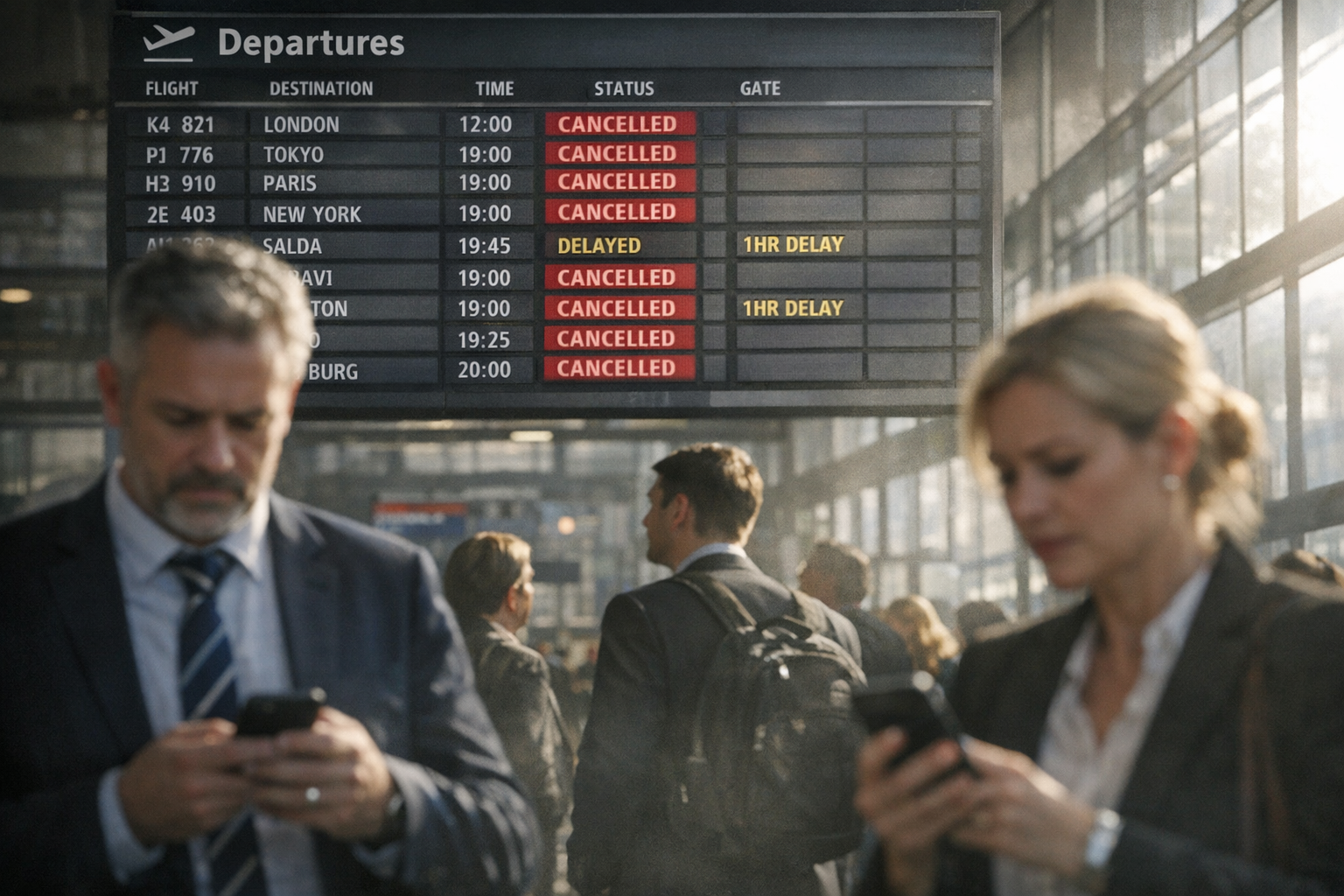
As of March 1, 2026, the numbers paint a stark picture. According to FlightAware data cited by Travel And Tour World, European airports alone have recorded 397 flight cancellations and 1,997 delays since the conflict began. The ripple effects extend far beyond the immediate conflict zone.
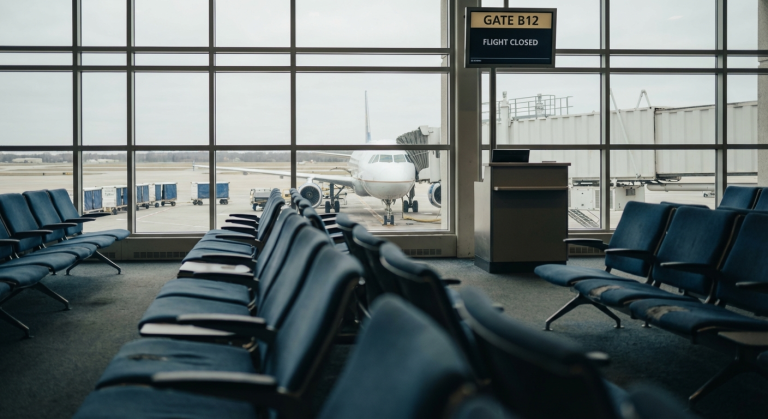
Seven countries closed their airspace entirely: Israel, Qatar, Syria, Iran, Iraq, Kuwait, and Bahrain. The United Arab Emirates implemented a “temporary and partial closure,” grounding operations at Dubai International Airport, Zayed International Airport in Abu Dhabi, and Hamad International Airport in Doha.
These are not minor hubs. Emirates, Qatar Airways, and Etihad collectively handle approximately 90,000 passengers daily through these airports, according to aviation analytics firm Cirium. The closure represents one of the most significant aviation disruptions since the early days of the COVID-19 pandemic.
European Hubs Bear the Brunt
European travelers are experiencing substantial disruption as airlines scramble to reroute flights around closed airspace. Istanbul Sabiha Gokcen International Airport leads European cancellations with 55 flights grounded and 98 delayed. London Heathrow follows with 38 cancellations and 99 delays, while Amsterdam Schiphol reports 26 cancellations and 119 delays.
Frankfurt International, Charles de Gaulle in Paris, and Istanbul’s main airport have all experienced double-digit cancellations alongside significant delays. The pattern reflects the critical role these hubs play in connecting Europe to Asia and the Middle East.
British Airways has suspended flights to Tel Aviv and Bahrain through at least March 6, offering passengers free rebooking to these destinations. KLM extended its Tel Aviv suspension through March 1. Lufthansa has suspended service to multiple Middle Eastern cities until March 7. Turkish Airlines suspended flights to Lebanon, Syria, Iraq, Iran, and Jordan through Monday, with additional suspensions affecting Qatar, Kuwait, Bahrain, the UAE, and Oman.
Rerouting Challenges and Cost Implications
Airlines still operating flights between Europe and Asia face difficult choices. Rerouting south over Saudi Arabia adds hours to flight times and consumes significantly more fuel. These additional costs will pressure already thin margins, and ticket prices could rise if the conflict persists.
Saudi Arabian air traffic controllers face increased workload managing diverted traffic, potentially forcing them to slow operations for safety. Meanwhile, countries that closed their airspace lose overflight fees, a significant revenue source for some governments.
Henry Harteveldt, airline industry analyst and president of Atmosphere Research Group, offered a blunt assessment: “For travelers, there’s no way to sugarcoat this. You should prepare for delays or cancellations for the next few days as these attacks evolve and hopefully end.”
What Travel Merchants Should Monitor
For travel merchants and payment processors, this crisis creates several immediate operational concerns:
- Chargeback risk is elevated. Canceled flights and disrupted itineraries historically correlate with increased dispute activity. Merchants should document all communications regarding cancellations and rebooking policies carefully.
- Cash flow pressure. Airlines issuing refunds and waivers will face working capital strain. Payment processors handling airline merchant accounts should monitor reserve requirements and settlement timing.
- Fraud exposure. Crisis periods create opportunities for bad actors. Scammers exploit traveler desperation with fake rebooking services and fraudulent claims. Enhanced verification protocols are warranted.
Timeline Uncertainty
Industry experts caution that disruption could extend beyond the immediate crisis period. Mike McCormick, former FAA air traffic control overseer now teaching at Embry-Riddle Aeronautical University, noted that airspace might reopen in stages over 24 to 36 hours as military operations become more defined.
However, the June 2025 US-Israel attack on Iran lasted 12 days. Merchants should not assume quick resolution. The unpredictable nature of military conflict makes specific predictions unreliable.
Passenger Response and Alternative Arrangements
Stranded travelers are responding with resourcefulness and frustration. At least 145 planes en route to Middle Eastern destinations were diverted to Athens, Istanbul, Rome, and other European cities. One Philadelphia-Doha flight spent nearly 15 hours airborne before returning to its origin.
Jonathan Escott, stranded at Newcastle Airport after his Emirates flight to Dubai was canceled, captured the confusion many travelers feel: “No one knows. No one really knows what’s going on with the conflict, really. Not Emirates, Emirates don’t have a clue. No one has a clue.”
Strategic Considerations for the Travel Industry
Beyond immediate operational concerns, this crisis highlights vulnerabilities in the global aviation network’s concentration around Gulf hubs. The geographic realities of air routing mean that Middle East conflicts inevitably affect global travel patterns.
For travel merchants, the lesson is clear: diversification and flexibility matter. Payment processors serving travel verticals should stress-test their systems against similar disruption scenarios. Travel insurance products may see increased demand as travelers seek protection against geopolitical risks.
As Harteveldt advised affected travelers: “You will have to be very creative about how you get home.” The same creativity may be required from travel merchants navigating the financial and operational complexities this crisis creates.
Current as of March 1, 2026. Travelers should verify current flight status directly with airlines before heading to airports.