How Airlines Are Finally Fixing Their Fragmented Payments Infrastructure
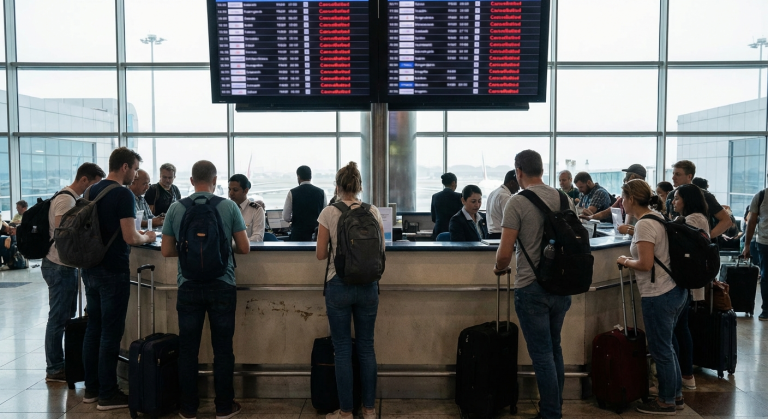
The airline industry has long suffered from a payments problem that passengers rarely see but constantly feel. Behind every booking sits a surprisingly complex technical structure built decades ago around Passenger Name Records (PNRs), e-ticket numbers, and separate Electronic Miscellaneous Documents (EMDs) for ancillary items such as seats and baggage. When something goes wrong (disruptions, rebookings, or adding services after purchase), the fragmentation becomes visible. What looks like a single trip to the passenger is often several loosely connected components behind the scenes.
That is finally changing. In early 2026, major carriers and technology providers are deploying unified order management systems, biometric payment authentication, and integrated loyalty-to-retailing platforms that promise to simplify the entire commerce stack.
The Order ID Revolution
In January 2026, Lufthansa Group and Amadeus announced a partnership that attacks this structural problem directly: the introduction of a unified Order ID. The system replaces fragmented PNRs and e-ticket numbers with a single master reference for the entire trip.
Here is how it works in practice:
- A single Order ID replaces multiple legacy reference numbers, serving as the master record for the entire journey
- All components (flights, seat selections, baggage allowances, ancillaries) are stored in one unified order record
- The system runs on Amadeus Nevio platform and aligns with IATA ONE Order standard
- Rollout extends across all nine Lufthansa Group carriers including Austrian, Brussels, Swiss, and Eurowings
This matters for payments because fragmented records create friction at the transaction layer. When a passenger wants to add a checked bag or upgrade their seat, legacy systems often require separate payment flows. The unified Order ID enables a single checkout experience regardless of how many services are added.
Biometric Security Meets Payment Authentication
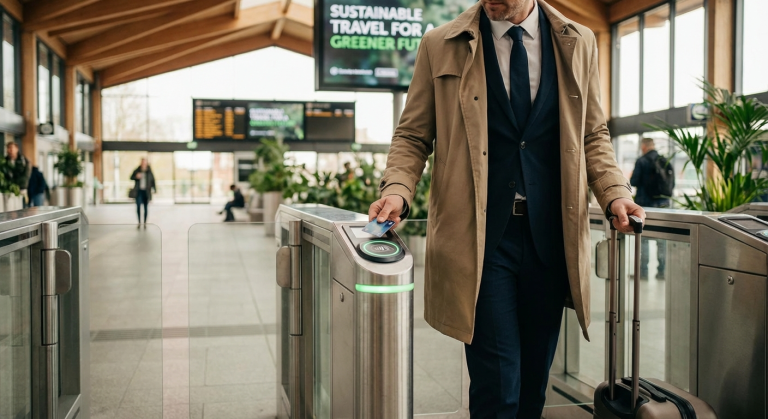
The Transportation Security Administration expanded PreCheck Touchless ID to 65 U.S. Airports in early 2026, marking the largest U.S. Biometric rollout to date. Eligible passengers can now use facial recognition instead of physical ID at security checkpoints.
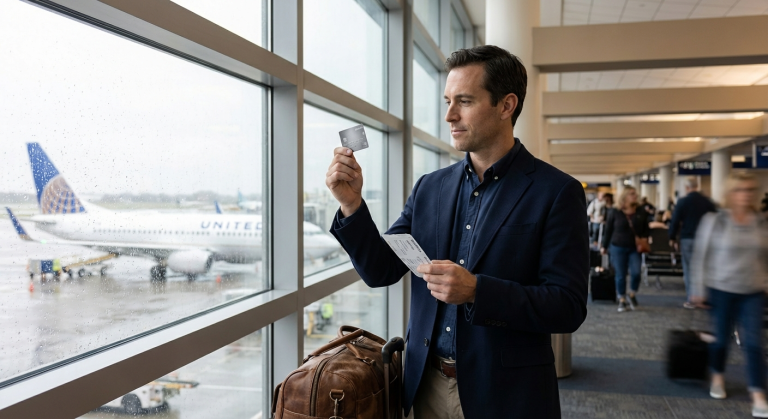
This infrastructure has direct implications for airline payments. As airports deploy biometric verification at multiple touchpoints (check-in, security, boarding, and increasingly at retail locations), the same authentication framework can support payment authorization. Several carriers are piloting programs where enrolled passengers can complete inflight purchases using biometric verification tied to stored payment methods, eliminating the need to handle physical cards at 35,000 feet.
Loyalty Programs Become Payment Instruments
Airlines have spent decades building loyalty programs into billion-dollar businesses. They have accumulated extensive customer data: transaction histories, tier progressions, co-brand card spending patterns, and partner interactions. Yet this intelligence has remained largely isolated from the systems that shape the customer journey, including offer engines, booking platforms, and payment processors.
The emerging model integrates loyalty currency directly into the retailing workflow. Consider the contrast between legacy and modern approaches:
Legacy experience: A gold-tier member books a flight online and manually selects entitled benefits like baggage allowances, seat preferences, and travel insurance. The loyalty tier serves primarily as credentials for lounge access and priority boarding, not as a driver of personalized service during booking.
Modern experience: The system immediately recognizes the customer profile and preferences. Drawing on historical travel patterns, it proactively suggests bundled offers combining flights with partner services. Payment executes seamlessly through an optimized combination of loyalty currency and cash in a single transaction.
This is a fundamental shift from rewards to recognition. Rather than accumulating points for future redemption, loyalty status actively shapes offer creation, dynamic pricing, and personalized bundles at the moment of decision.
What This Means for Travel Merchants
For merchants selling into the airline ecosystem, these infrastructure changes create both opportunities and requirements:
- Unified order records mean ancillary products (insurance, ground transport, hotels) can be attached to the core booking more seamlessly, reducing abandonment at checkout
- Biometric authentication is becoming a table-stakes expectation at airport retail locations, particularly for high-value transactions
- Loyalty integration increasingly means supporting split-tender transactions where points cover a portion of the purchase
- API-first architecture replaces traditional EDI connections, requiring merchants to modernize their technical integrations
Key Takeaways
- Airline payments infrastructure is shifting from fragmented PNR-based systems to unified Order IDs that simplify the entire transaction stack
- Lufthansa Group and Amadeus are leading this transition with a rollout across nine carriers, aligning with IATA ONE Order standards
- Biometric authentication at airports is expanding rapidly, with implications for both security and payment verification
- Loyalty programs are evolving from post-transaction rewards to real-time payment instruments integrated at the point of purchase
- Travel merchants must adapt to API-first integration models and support split-tender transactions combining loyalty currency with traditional payments
Sources: OAG Airline-Tech Innovation Radar, Asian Aviation