Cybercriminals are targeting hotel property management systems, booking platforms, and staff email accounts with increasingly sophisticated phishing campaigns. Industry experts warn that the attacks are becoming more contextual, more urgent, and harder to spot.
The hospitality sector is facing an unprecedented surge in cybercrime. Hotels, resorts, and booking platforms are being urged to enhance cybersecurity measures as attackers actively exploit vulnerabilities in property management systems (PMS), booking channels, and staff communications.
Industry leaders from Guestline (part of Access Hospitality), Mews, HotelTime, and Planet have outlined the current threat landscape and shared practical steps businesses can take to protect both guest and organizational data.
The New Wave of Phishing
Cybersecurity specialists across the hospitality technology space have noted a sharp rise in phishing attempts targeting hotel staff. These attacks aim to steal credentials, gain unauthorized access, and ultimately compromise sensitive information.
Nicola Longfield, General Manager for Accommodation at Access Hospitality, explains the mechanics:
“Cybercriminals are increasingly targeting hotel property management systems, email platforms, and booking channels. They send emails that appear to come from trusted sources, including OTA platforms or internal systems, designed to deceive employees into revealing login information or installing malware.”
Attackers have elevated their game. They create nearly identical replicas of legitimate system login pages and register similar domain names to trick unsuspecting staff. Some even use Google Ads to boost fraudulent websites’ visibility, making them appear credible at first glance.
“Once attackers gain access through stolen credentials, they can send fake reservation confirmations or phishing emails to guests, compromising trust and exposing sensitive information,” Longfield adds.
Contextual and Targeted Attacks
Jan Hejny, CEO of HotelTime, highlights a concerning trend: phishing attempts are becoming increasingly contextual.
“Fraudsters often impersonate well-known brands, including hotels, booking platforms, and technology providers. They mimic realistic payment or booking scenarios and exploit urgency, such as failed payments or imminent cancellations, to pressure staff into taking immediate action without verification.”
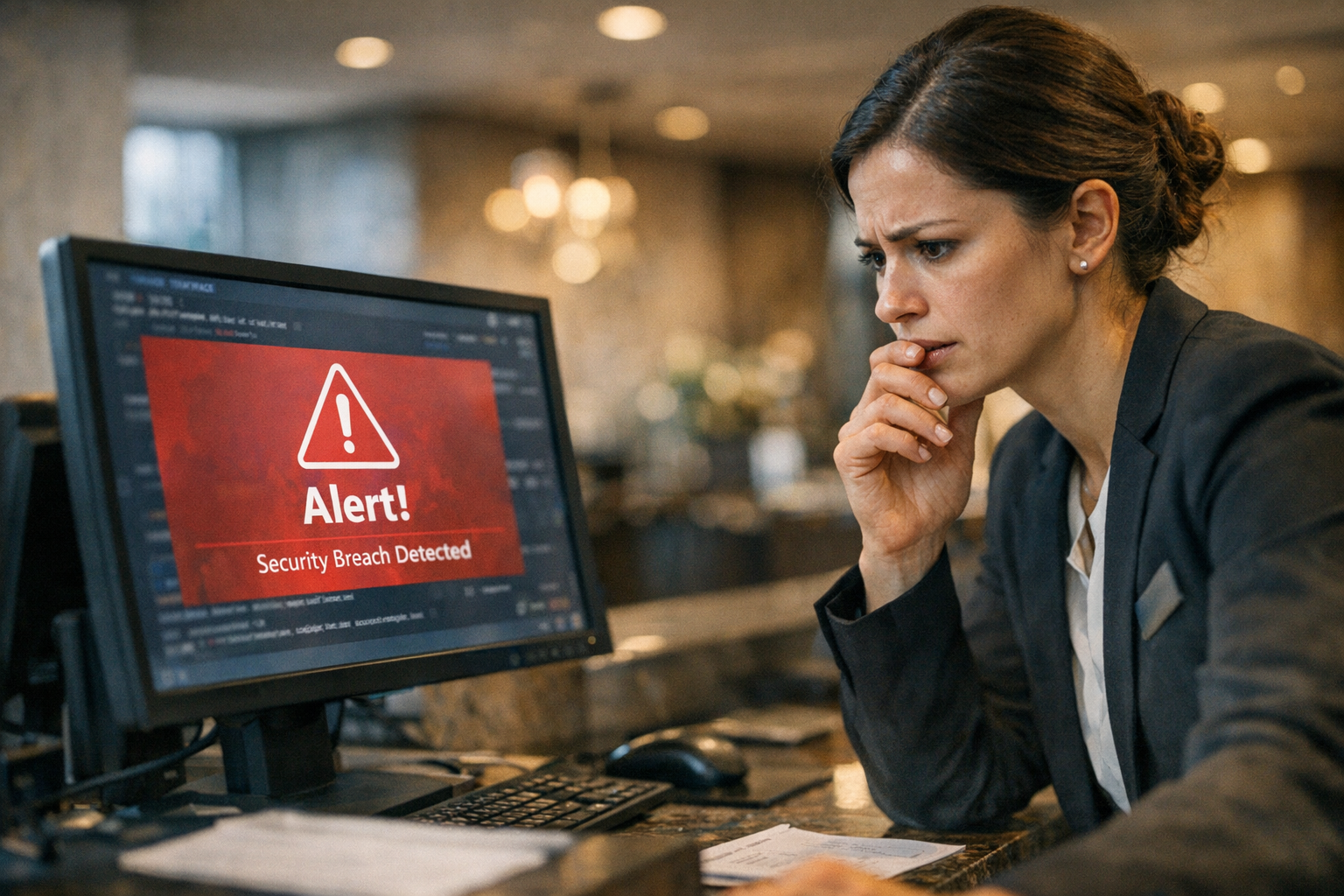
This urgency-based social engineering is particularly effective in hospitality, where staff are trained to focus on guest service and rapid problem resolution. A front desk agent facing what appears to be an urgent payment failure from a major OTA is more likely to click a malicious link than to stop and verify.
Why Hotels Are Prime Targets
The hospitality industry’s unique characteristics make it attractive to cybercriminals:
- High staff turnover: Frequent onboarding means constantly training new employees on security protocols
- 24/7 operations: Night shifts and weekend staffing often have reduced IT support
- Multiple system integrations: Hotels rely on interconnected PMS, channel managers, booking engines, and payment processors
- Valuable guest data: Credit card information, passport details, and personal preferences are lucrative on dark web markets
- Revenue pressure: The focus on occupancy and guest satisfaction can overshadow security vigilance
What Operators Can Do
Industry experts recommend several concrete steps for hotel operators:
Multi-Factor Authentication (MFA): Enable MFA on all critical systems, especially PMS, email, and financial platforms. This single step blocks the majority of credential-based attacks.
Staff Training: Regular security awareness training should include real-world examples of hospitality-specific phishing attempts. Staff should know that legitimate OTAs and technology partners will never ask for passwords via email.
Verification Protocols: Establish clear procedures for verifying unusual requests, especially those involving payments, refunds, or system access. Create a culture where staff feel empowered to double-check before clicking.
System Monitoring: Add monitoring tools that can detect unusual login patterns, such as access from unexpected geographic locations or during off-hours.
Vendor Due Diligence: Ensure all technology partners maintain robust security standards. Ask about their incident response plans and how they communicate security updates.
The Bottom Line
Phishing is not a theoretical risk for the hospitality industry. It is an active, ongoing threat that is growing in sophistication. The cost of a successful attack extends beyond financial losses to include regulatory penalties, reputational damage, and eroded guest trust.
For merchant operators, the message is clear: cybersecurity is no longer just an IT issue. It is a business continuity issue, a compliance issue, and ultimately a competitive issue. Hotels that invest in robust security measures and staff training will be better positioned to protect their guests, their data, and their bottom line.
Sources
- Travel And Tour World – Hospitality Industry Faces Rising Threat of Phishing Attacks
- PYMNTS.com – 68% of Banks Turn to AI as Fraud Outpaces Rule-Based Systems
Have you encountered phishing attempts at your property? Share your experience with our editorial team.