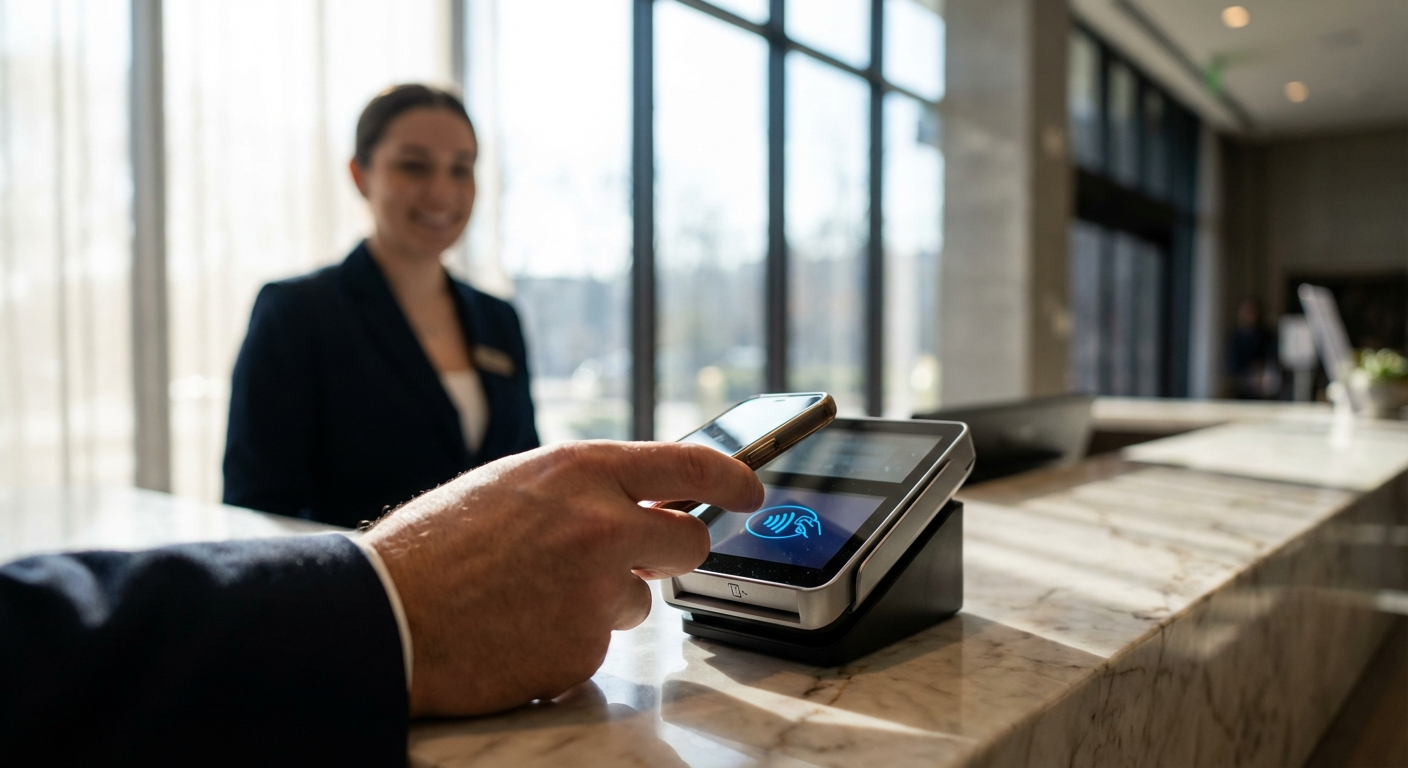
Contactless payment technology has moved from pandemic-era convenience to operational necessity for hotels worldwide. As guest expectations shift and transaction volumes grow, properties that fail to modernize their payment infrastructure risk falling behind competitors who have embraced tap-to-pay systems.
The Contactless Revolution Is Here
The hospitality industry stands at a technological crossroads. While traditional hotels rely on outdated payment systems that create bottlenecks and frustrated guests, forward-thinking properties are racing ahead with contactless solutions that transform every transaction into a seamless experience. According to recent industry data, 65% of hospitality businesses are prioritizing tap-to-pay payment methods in 2025, marking the most significant shift in hotel payment processing since the introduction of credit cards.
The numbers tell a compelling story. Industry forecasts suggest that over 50% of all global transactions will be contactless by the end of 2025. For hotels, this is not a trend to watch from the sidelines. It is a fundamental change in how guests expect to pay for services.
What Contactless Means for Hotel Operations
Contactless hospitality technology goes beyond simply removing physical touch-points. It reimagines the guest journey so that routine tasks feel effortless, leaving more room for genuine moments of connection between staff and guests.
The core components of a modern contactless payment system include:
- Mobile wallets (Apple Pay, Google Wallet, Samsung Pay) that allow guests to pay with their smartphones
- Tap-to-pay cards using NFC technology for instant transactions
- QR code payments for poolside bars, restaurants, and spa services
- In-room payment integration for room service and amenity purchases
- Self-service kiosks for check-in and checkout with embedded payment options
Well over 2 billion people are using mobile wallets today, and that number is expected to reach 4.8 billion by 2025 according to payments industry research. Hotels that do not accommodate these payment methods are effectively excluding a growing segment of the traveling public.
Generational Shifts Drive Adoption
Guest demographics play a significant role in the urgency of contactless adoption. Research shows that 73% of millennials and 66% of Generation Z embrace contactless payment methods. For these travelers, seamless digital interactions are as fundamental as clean rooms and reliable Wi-Fi.
This generational preference extends to business travel as well. Corporate travelers increasingly expect the same payment convenience they experience in their personal lives. Hotels that cater to business clientele must recognize that expense report workflows now favor digital receipts and mobile payment histories over traditional paper trails.
Operational Benefits Beyond Guest Satisfaction
While improved guest experience is the most visible benefit, contactless payment systems deliver significant operational advantages:
- Faster transaction processing reduces queues at peak times
- Reduced cash handling lowers security risks and cash management costs
- Automated reconciliation simplifies accounting and reduces errors
- Integrated data capture enables better revenue tracking and forecasting
- Staff efficiency gains allow team members to focus on service rather than payment processing
Contactless checkout allows guests to submit departure details via web forms, automatically check out, and notify housekeeping directly. This reduces unnecessary knocks on doors and improves operational efficiency across departments.
Mobile Key Integration: The Next Frontier
Contactless payments are increasingly paired with mobile key technology to create a fully frictionless experience. Industry forecasts suggest that mobile key adoption will exceed 70% globally by 2025. When combined with contactless payments, guests can complete their entire stay from arrival to departure without visiting the front desk or handling physical cards.
This integration creates opportunities for ancillary revenue. Guests using mobile keys and contactless payments show higher propensity to purchase in-room amenities, upgrade services, and extend stays when the process requires minimal effort.
Implementation Considerations for Hoteliers
Smaller properties concerned about implementation costs have options. Web-based check-in with QR key delivery requires no custom app development. Modular vendor solutions allow hotels to integrate payment, key, and property management systems gradually rather than replacing entire technology stacks at once.
Critical success factors for implementation include:
- Selecting payment processors with hospitality-specific expertise
- Ensuring PCI DSS compliance for all contactless transaction methods
- Training staff to troubleshoot guest payment issues quickly
- Maintaining backup payment options for guests who prefer traditional methods
- Integrating contactless systems with existing property management and accounting software
Security and Trust Considerations
Contactless payments offer security advantages over traditional card transactions. Tokenization and encryption protect guest data during transmission. Biometric authentication through mobile devices adds an additional layer of verification that magnetic stripe cards cannot match.
However, hotels must communicate these security benefits clearly to guests who may be unfamiliar with contactless technology. Staff training should include scripts for addressing common concerns about data privacy and transaction security.
Key Takeaways
- Contactless is now baseline, not premium. Guests expect tap-to-pay options at every transaction point.
- Demographics drive urgency. Millennial and Gen Z travelers will choose properties based on payment convenience.
- Integration amplifies value. Combining contactless payments with mobile keys and self-service check-in creates compounding operational benefits.
- Implementation is scalable. Hotels of all sizes can adopt contactless solutions without massive upfront investment.
- Security is a feature. Properly implemented contactless systems offer better fraud protection than traditional payment methods.
Hotels that delay contactless payment adoption risk more than lost transactions. They risk losing entire segments of the traveling public who have already moved on from physical cards and cash. The technology is available, the guest expectations are clear, and the operational benefits are measurable. The only question is which properties will act before their competitors do.
Sources: HotelMinder, Billfold POS, Alliants