The Rise of Wearable Payments at Sea
The cruise industry has long operated as a cashless economy. But the latest evolution goes beyond plastic keycards. Major cruise lines are now deploying sophisticated wearable devices that transform how passengers pay, move, and experience their voyage.
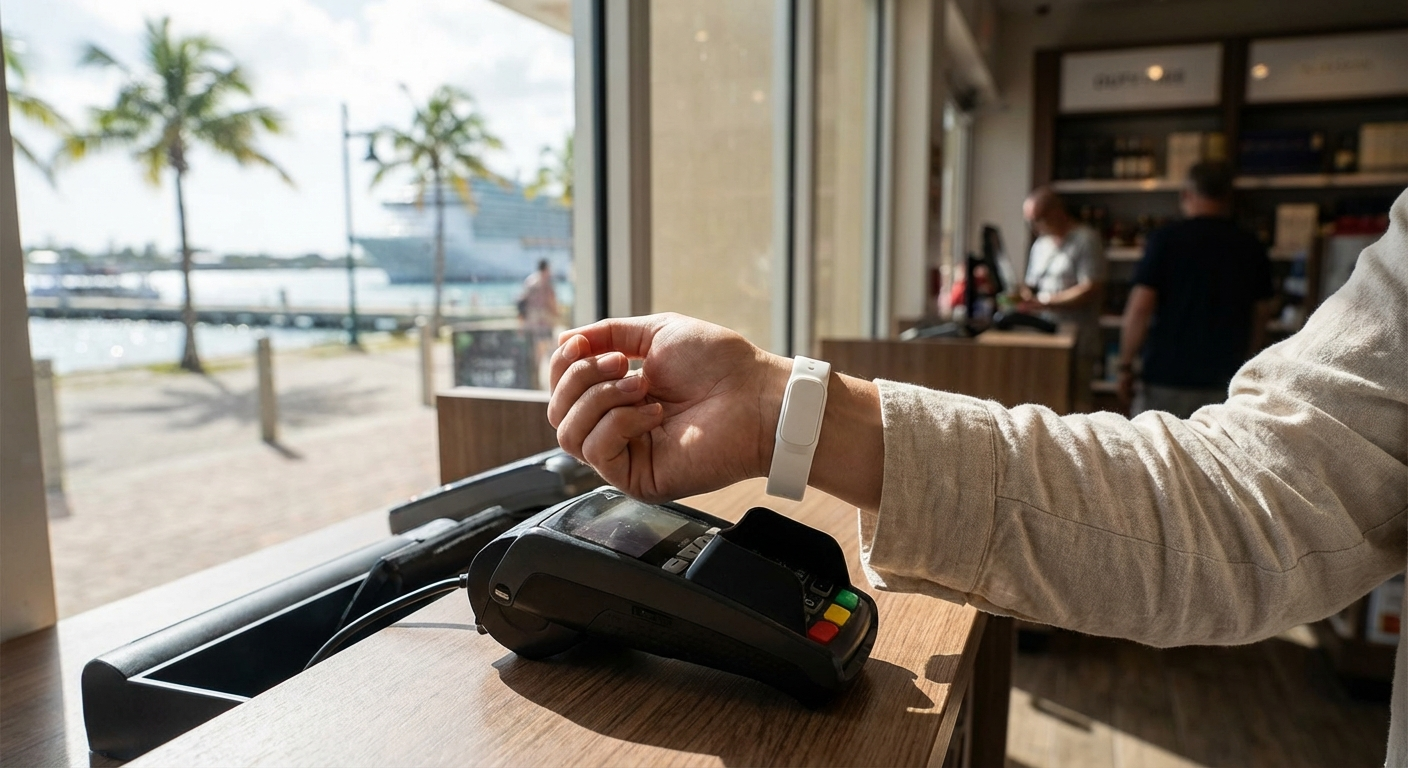
Princess Cruises led the charge with its MedallionPay system, a contactless payment platform built around the Princess Medallion wearable. Originally limited to onboard purchases, the company has expanded the technology into destination ports, allowing guests to shop, dine, and book excursions without carrying wallets or phones.
How MedallionPay Works
The Princess Medallion functions as a quarter-sized wearable device that passengers carry in a wristband, clip, or pendant. It uses Near Field Communication (NFC) technology to enable tap-to-pay transactions across the ship and at participating merchants in ports of call.
According to Princess Cruises, MedallionPay is now available in St. Thomas, Cabo San Lucas, Cozumel, and Puerto Vallarta, with expansion planned for all Alaska ports. The program includes over 65 merchants across categories ranging from jewelry stores to excursion operators.
Key features of the system include:
- Instant payment processing without physical cards or cash
- 7% cashback on shoreside purchases as onboard credit during the inaugural year
- No setup fees or monthly contracts for participating merchants
- Transaction fees that include all credit card processing costs
Industry Adoption Accelerates
Princess is not alone in pursuing wearable payment technology. The broader cruise industry has embraced similar solutions as passenger expectations shift toward seamless, smartphone-free experiences.
Royal Caribbean offers WOW Bands as optional wearable payment devices across its fleet. The bands function alongside the cruise line’s SeaPass card system, allowing guests to make purchases and access staterooms with a tap. Updated designs and pricing rolled out in 2025, signaling continued investment in the technology.
Other major operators have followed suit:
- Disney Cruise Line introduced DisneyBand+ in 2025, expanding its park-proven wearable technology to maritime operations
- MSC Cruises offers branded wristbands for onboard payments and access control
- Virgin Voyages deploys Sea Bands for similar functionality across its adult-only fleet
The Passenger Demand Data
Research indicates strong consumer appetite for digital payment solutions at sea. According to McKinsey’s 2022 Global Payments Report, 41% of cruise passengers expressed interest in using digital wallets for onboard purchases, while 44% want mobile check-in capabilities.
The pandemic accelerated adoption of contactless technologies across travel sectors. For cruise lines, wearables address multiple operational challenges simultaneously:
- Reduced cash handling eliminates currency exchange complexity and security risks
- Streamlined accounting consolidates all passenger spending into unified folio systems
- Enhanced data capture enables personalized marketing and operational optimization
- Improved hygiene reduces shared touchpoints compared to traditional payment methods
Merchant Benefits in Port
The expansion of wearable payments beyond ship boundaries creates new opportunities for destination merchants. Princess Cruises markets MedallionPay to local businesses with a straightforward value proposition: no upfront costs, no long-term contracts, and integrated credit card processing.
For merchants in cruise-dependent economies, the calculus is simple. Passengers using MedallionPay spend onboard credit they have already budgeted for their vacation. The 7% cashback incentive during the program’s inaugural year further encourages adoption.
Prominent retailers already participating include Diamonds International and Cariloha, along with dozens of smaller restaurants, souvenir shops, and tour operators.
Technical Infrastructure
Modern cruise payment systems rely on sophisticated backend infrastructure. Royal Caribbean uses Starlink satellite connectivity for real-time personalization and payment processing, ensuring transactions work reliably even mid-ocean.
The integration of Internet of Things (IoT) technology enables more than just payments. These wearables function as:
- Stateroom keys
- Photography tagging devices
- Location beacons for crew assistance
- Gamification tools for onboard activities
Key Takeaways
- Wearable payment technology has moved from novelty to industry standard across major cruise lines
- Princess Cruises’ MedallionPay expansion into destination ports is a significant evolution in cruise commerce
- Passenger demand for contactless, phone-free payment options continues to grow
- Merchants in cruise ports can adopt these systems without upfront investment or long-term commitments
- Satellite connectivity improvements are enabling real-time payment processing even at sea
For travel merchants and payment processors, the cruise industry presents a concentrated market where wearable adoption is already advanced. The infrastructure investments made by cruise lines create opportunities for fintech partners, destination merchants, and ancillary service providers to tap into a captive, high-spending customer base.