
How Payment Methods Are Shaping Destination Choices in 2025
The travel experience no longer begins at the airport. For millions of tourists, vacation planning now includes a careful review of how they will pay for meals, transport, and souvenirs once they arrive. Payment infrastructure has become a genuine competitive advantage for destinations. Countries that remove friction at the point of sale are capturing larger shares of global tourism spend.
The Cash-to-Digital Transition
Cash is losing its dominance as the default travel currency. According to research from Discover Global Network, nearly half of all travelers begin planning their payment strategy before departure. When selecting leisure destinations, 76% of consumers focus on food and restaurant activities, and they expect seamless payment acceptance at every stop.
Security concerns remain prominent. The Discover survey found that 59% of travelers are somewhat concerned about payment fraud while abroad, and an additional 22% are very concerned. This anxiety is driving adoption of methods perceived as safer, including contactless cards and digital wallets with tokenized credentials.
Cross-Border Payment Growth
Global tourism is fueling unprecedented cross-border transaction volume. Visa data shows cross-border transactions reached 771 million between June 2023 and June 2024. Credit and debit cards remain the most popular choice for international travel, used by over 50% of travelers.
Regional preferences vary significantly. In the GCC region, more than 70% of travelers prefer digital wallets over physical cards. This preference reflects broader trends in Asia where mobile-first payment ecosystems have matured faster than in Western markets. Visa reports that 71% of consumers feel overwhelmed by payment options and want clearer guidance on which methods work best abroad.
Japan: A Case Study in Destination Payment Evolution
Japan has a compelling example of how rapidly payment infrastructure can transform a destination’s appeal. Historically cash-reliant, Japan has accelerated its shift toward cashless transactions. According to the Ministry of Economy, Trade, and Industry, Japan’s cashless payment ratio reached 39.3% in 2023, up from 36.0% in 2022. The government initially targeted 40% by 2027 but moved that goal to 2025 ahead of the Osaka-Kansai Expo.
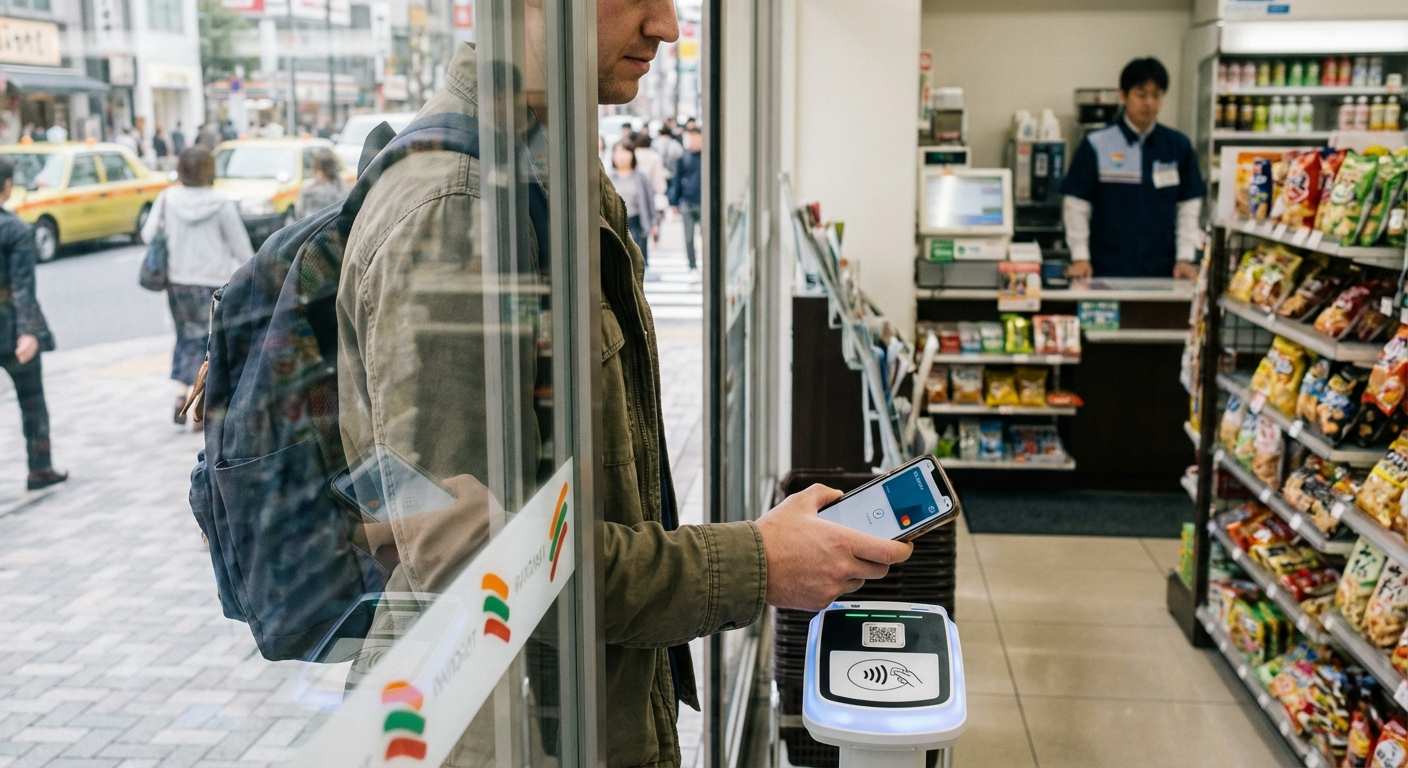
The Japan National Tourism Organization now actively promotes cashless acceptance as a convenience for visitors. Credit cards (Visa, JCB, and Mastercard) are accepted at major hotels, department stores, and urban restaurants. Contactless RFID payments are increasingly available at convenience stores and chain retailers.
However, challenges persist. As payment processor KOMOJU notes, many smaller establishments, particularly local restaurants and rural accommodations, remain cash-only. Visitors venturing outside major cities still need physical yen. Before the pandemic, roughly 70% of foreign visitors indicated they would have spent more if cashless options were universally available.
What Merchants and Destinations Should Do
Tourism-dependent businesses can capture more international spend by addressing three priorities:
- Accept multiple card networks. Visa, Mastercard, and JCB have the broadest international acceptance. Displaying accepted payment logos at entrances helps travelers identify compatible merchants before entering.
- Enable contactless terminals. RFID-enabled payments reduce transaction friction and address security concerns. Travelers prefer tap-to-pay for speed and because cards never leave their hands.
- Support popular digital wallets. In Asia, this means Alipay, WeChat Pay, and Kakao Pay. In Western markets, Apple Pay and Google Pay adoption continues climbing. QR code payment acceptance can unlock spending from mobile-first travelers.
Key Takeaways
- Payment infrastructure influences destination selection. Travelers research acceptance before booking.
- Security concerns drive wallet adoption. 81% of travelers express some level of fraud anxiety while abroad.
- Cross-border transaction volume hit 771 million in the year to June 2024, indicating strong tourism payment flow.
- Japan’s rapid cashless adoption demonstrates how government targets and merchant incentives can transform a destination’s payment landscape within a few years.
- Merchants in rural or cash-dependent regions risk losing tourism revenue by failing to offer digital payment options.
Destinations that treat payment acceptance as infrastructure, not an afterthought, will capture disproportionate shares of the recovering global tourism economy. The merchants who win in 2025 will be those where travelers never have to ask, “Do you take cards?”