Congress Takes Aim at Credit Card Loyalty Programs. The Travel Industry Is Worried.
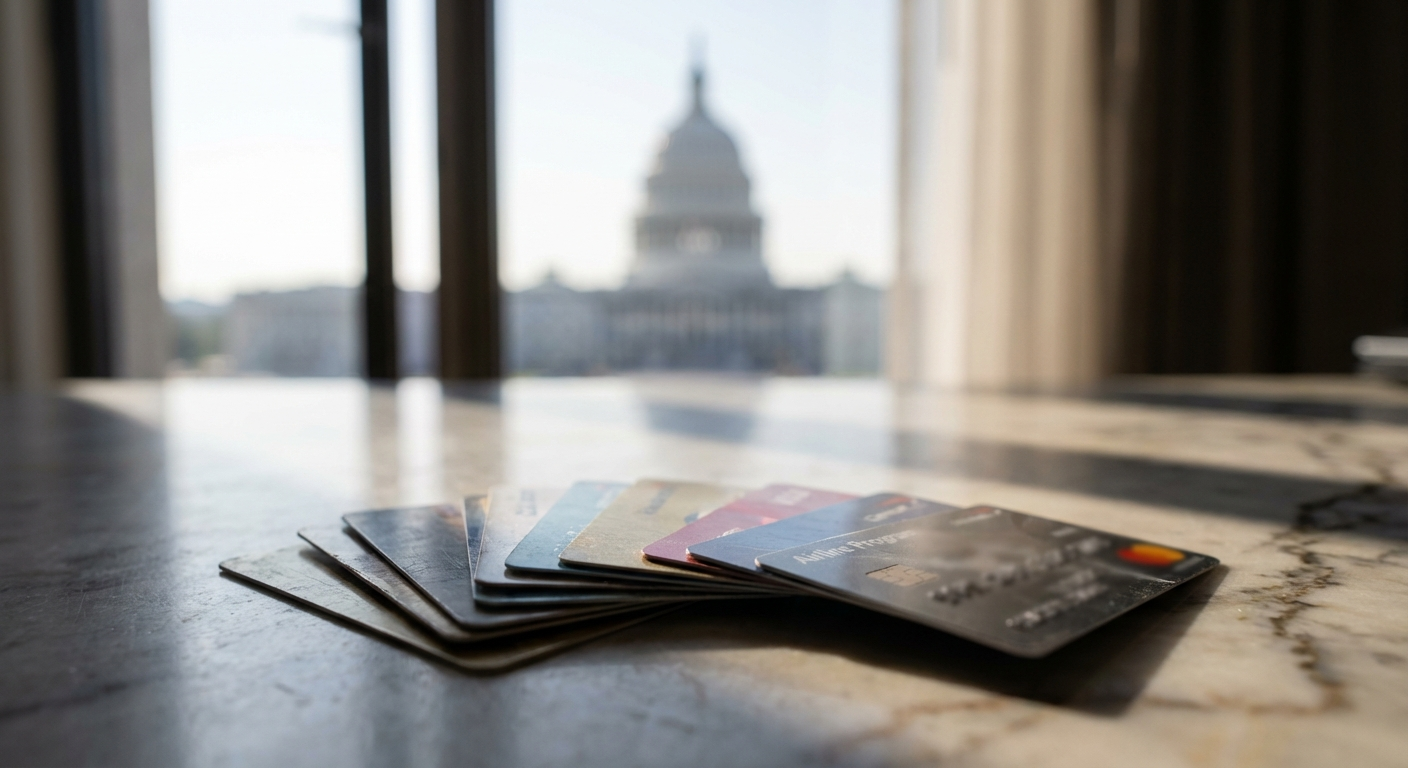
New legislation working its way through Congress could fundamentally reshape how credit card loyalty programs operate. For travel merchants, airlines, and hotel chains that have built substantial revenue streams around co-branded cards and points ecosystems, the stakes could not be higher.
The Credit Card Competition Act, recently reintroduced in the Senate, would force card issuers to include two unaffiliated payment networks on each card. That would allow merchants to route transactions through whichever network offers lower fees at the point of sale. Separately, a federal judge last week upheld an Illinois state law, the Interchange Fee Prohibition Act, which bans swipe fees on taxes and tips. The ruling could lead to higher card fees and reduced rewards for consumers.
Travel industry observers are watching closely. The economics of airline and hotel loyalty programs have become deeply intertwined with credit card swipe fees. When a consumer books a flight or hotel room using a co-branded card, the issuing bank collects an interchange fee (typically 2 to 3.5 percent) and shares a portion of that revenue with the airline or hotel partner. That revenue sharing has become a pillar of airline profitability.
The Numbers Behind the Threat
According to recent industry data, U.S. Companies are expected to issue or redeem approximately $26 billion in points to customers this year. That figure does not include the hundreds of billions of dollars in outstanding points liabilities that keep travelers locked into loyalty programs despite periodic devaluations and redemption challenges.
Delta Air Lines alone reported a 6 percent increase in loyalty revenue last year, with co-brand income from American Express climbing 11 percent to reach $8.2 billion. For Delta and other major carriers, these arrangements have become critical profit centers that help offset the thin margins of actual flight operations.
Brian Kelly, founder of The Points Guy, has been vocal about the potential consequences.”I do not think enough people realize the ramifications of these laws.”
How the Legislation Would Change the Game
Under the proposed Credit Card Competition Act, retailers would be able to choose which network processes each transaction. In practice, that means merchants would likely select the option with lower swipe fees than the 2 to 3.5 percent that premium credit cards typically charge.
For consumers, the downstream effects could include fewer points earned per dollar spent, reduced fraud protection, and the erosion of perks that those interchange fees currently help subsidize. The Illinois ruling adds another layer of complexity by restricting fees on taxes and tips, which could push issuers to recoup revenue through higher annual fees or less generous rewards structures.
Kelly framed the issue in stark terms: “We are going to allow a retailer to decide how a customer pays for a purchase with their own money? If retailers want people to use their debit card, then they should incentivize it.”
What This Means for Travel Merchants
For airlines and hotels, the implications extend beyond the immediate revenue hit. Loyalty programs generate valuable data that lets companies recognize and engage their highest-value customers. Points liabilities also create powerful behavioral lock-in. Travelers who have accumulated substantial balances are more likely to book directly with the airline or hotel to maximize redemption value, bypassing online travel agencies and their associated commissions.
If interchange revenue declines, carriers and hotel chains may need to find alternative ways to monetize their loyalty programs. Several possibilities are already being discussed in industry circles:
- Higher annual fees for co-branded credit cards to compensate for lost interchange revenue
- More aggressive points devaluations to reduce outstanding liabilities
- Shift toward retail partnerships that generate revenue outside the traditional credit card ecosystem
- Direct subscription models where loyalty benefits are sold as standalone products
The Broader Context: Permanxiety and Travel Spending
The legislative threat comes at a moment when the travel industry is already navigating shifting consumer psychology. Skift coined the term “Permanxiety” in 2017 to describe the persistent state of anxiety that pervades modern life and manifests in concentrated form during travel. Eight years later, that anxiety has only intensified.
The travel industry has responded by monetizing that uncertainty directly. Flexible cancellation policies, disruption assistance, and travel protection products now represent significant revenue streams. While these offerings address genuine traveler concerns, their profitability has created incentives that may not always align with operational improvements.
If loyalty program economics are disrupted, travel merchants may face a double squeeze: declining co-brand revenue at the same time that consumers are becoming more price-sensitive and less brand-loyal.
Looking Ahead
The legislative outlook remains uncertain. The Credit Card Competition Act has been introduced in previous sessions without becoming law, and industry groups are expected to mount vigorous opposition. However, the Illinois ruling suggests that state-level action may proceed even if federal legislation stalls.
For travel merchants, the prudent approach is to begin modeling scenarios that include reduced interchange revenue and to explore alternative loyalty mechanics that are less dependent on credit card economics. Companies that can build direct relationships with customers, offering genuine value beyond points accumulation, will be best positioned to weather whatever changes come.
The loyalty ecosystem that has underpinned airline and hotel profitability for two decades is facing its most serious challenge in years. Whether that challenge translates into fundamental restructuring or merely a period of adjustment will depend on legislative outcomes that remain very much in flux.