Travel and hospitality platforms are bleeding money from an often-overlooked vulnerability: loyalty program fraud. New analysis from Fingerprint, a device intelligence firm, reveals that hospitality companies now lose an average of $11 million annually to fraudulent activity—with loyalty abuse emerging as a primary attack vector.
The $1–3 Billion Loyalty Fraud Problem
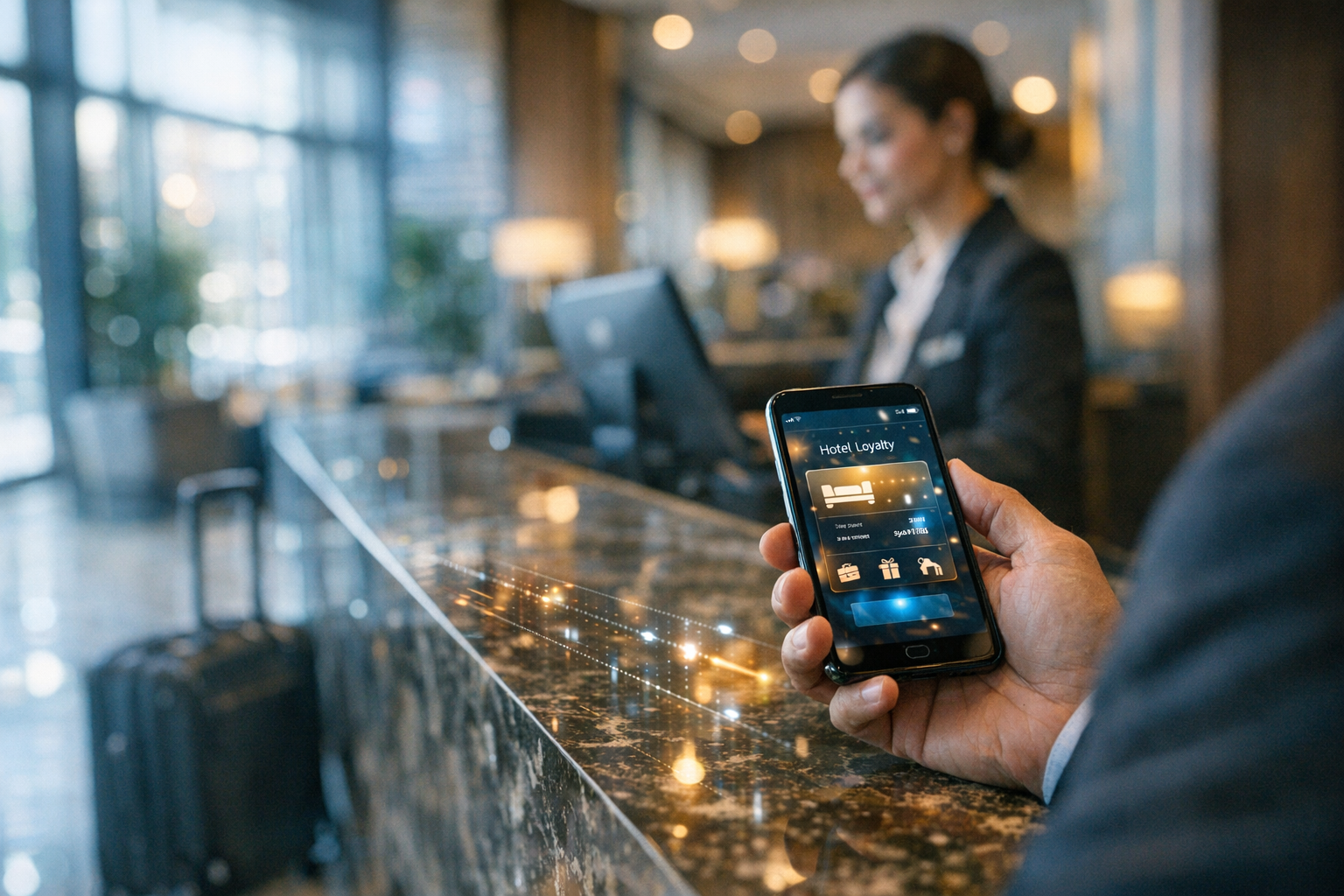
Rewards fraud has become a massive underground economy. According to the Fingerprint report and corroborating industry data, global losses from loyalty fraud now range between $1 billion and $3 billion annually. For travel brands, this represents both a direct financial hit and a long-term trust erosion problem.
Why are loyalty programs such attractive targets? The answer lies in how modern platforms have architected their customer experience. As brands unify identity systems, loyalty balances, and payment credentials into seamless digital wallets, they’ve inadvertently created high-value targets where a single breach cascades across multiple financial touchpoints.
“Points function as soft currency,” Fingerprint notes, “and often lack real-time monitoring.” Unlike credit card transactions that benefit from sophisticated fraud detection, loyalty point balances frequently move between accounts with minimal friction—and equally minimal oversight.
Account Takeover: The Entry Point
The Fingerprint analysis identifies account takeover (ATO) as the primary entry point for loyalty fraud. More than half—52%—of all loyalty fraud incidents begin with compromised credentials. Once attackers gain access to a loyalty account, they can:
- Drain accumulated points to third-party booking sites or merchandise
- Change account details to facilitate additional downstream scams
- Access linked payment methods for fraudulent bookings
- Sell account credentials on dark web marketplaces
The interconnected nature of modern travel platforms means a single ATO rarely stays contained. A compromised loyalty account can unlock payment cards, enable fraudulent room bookings, and even serve as a pivot point for targeting the victim’s employer through corporate travel portals.
Chargebacks as a Lagging Indicator
Fingerprint’s report highlights a 30% year-over-year increase in hospitality chargebacks—but with an important caveat. Chargebacks are delayed signals that capture where fraud lands, not where it starts.
By the time a merchant sees a chargeback, the fraud has already occurred. The attacker has already enjoyed the hotel stay, redeemed the points, or sold the booking to an unsuspecting traveler. For merchant operators, this creates a reactive posture that’s fundamentally unsustainable.
Session-Level Trust: A Preventive Framework
Fingerprint advocates for a shift from point-in-time authentication to session-level trust—continuous risk evaluation that monitors device signals and behavioral patterns throughout the customer journey.
Traditional fraud prevention relies on static checkpoints: login verification, 3D Secure at checkout, manual review for high-value redemptions. Session-level trust operates differently. It evaluates risk continuously, flagging suspicious activity the moment it occurs rather than waiting for the transaction to complete.
This approach is particularly relevant for travel merchants because the customer journey is inherently complex. Travel bookings involve multiple touchpoints across long time horizons—search, comparison, booking, modification, check-in, post-stay. Each interaction presents an opportunity for either legitimate engagement or fraudulent exploitation.
What This Means for Merchant Operators
For travel merchants processing payments and managing loyalty integrations, the Fingerprint data suggests three operational priorities:
First, audit loyalty account security as rigorously as payment card data. The same PCI-DSS discipline should apply to point balances and redemption flows. If your platform allows point transfers, gift card redemptions, or third-party bookings via loyalty currency, these warrant enhanced monitoring.
Second, implement continuous device intelligence rather than relying solely on login-time authentication. The device a customer uses at search should match the device at booking, check-in, and redemption. Device fingerprinting can catch account takeover attempts even when credentials are valid.
Third, treat chargeback spikes as diagnostic signals requiring upstream investigation. A 30% increase in chargebacks likely indicates systemic vulnerabilities in account security or booking verification—not merely bad luck or seasonal fraud patterns.
Bottom Line
The $11 million average annual fraud loss is not inevitable. It’s a function of architectural choices that prioritize seamless user experience without commensurate security investment. As loyalty programs become increasingly central to travel commerce—especially as brands consolidate and partnerships expand—the attack surface will only grow.
Merchant operators who treat loyalty fraud as a core payments risk, rather than a customer service nuisance, will be better positioned to protect both revenue and customer relationships.